Literacy Through Audio: What the Microphone Unlocks
Notes from the
YPG Podcasting Resources Pilot
When I set out to design audio-first materials to drive literacy development, I had more than twenty years of audio experience to draw from, but very little knowledge of literacy development. A Master’s of Education and a Multiple Subject Teaching Credential at UCLA taught me the basics, but I hadn't thought about how literacy develops since taking (and mostly tuning out) the required classes at UCLA. So I leaned on people locked in on literacy: my UCLA advisor Sara Kersey and English teacher and curriculum designer Raquel Olvera. They balanced out my lopsided foundation and got me up to speed on literacy development.
A decade of running YPG showed me that audio and creativity consistently boost engagement and deepen students’ thinking. I saw a thousand times how digital audio workstations turn a music classroom into a place where students worked harder than anyone asked them to. I suspected the same thing was possible in any other classroom. I caught glimpses of it when we ran podcasting units in YPG classes, and when Raquel told me how much her students took to it. But a glimpse is not proof. Now that we’ve wrapped the pilot of the YPG Podcasting Resources across eight schools in the US and Canada, I have proof of what audio actually does for literacy.
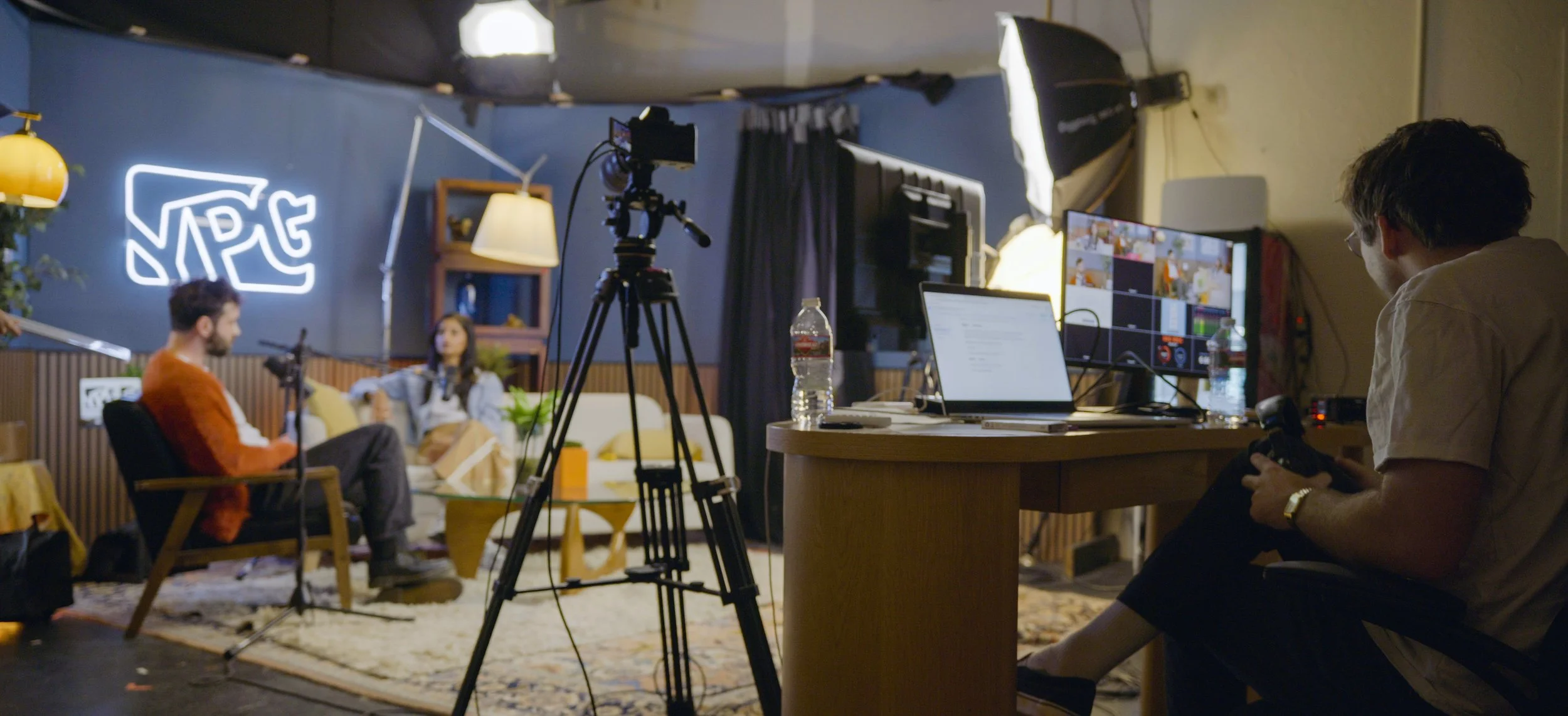
Shooting the YPG Podcasting Resources at Bad Ladder studios in Los Angeles.
If you zoom out and look at the field as a whole, audio has some presence in literacy instruction, but it’s largely misunderstood and misfiled.
Walk into the conversation and you find three rooms that almost never talk to each other:
Oracy: a movement to treat speaking and listening as seriously as reading and writing that’s having a real moment. But oracy in practice means live talk: discussion, debate, presentation. The microphone is nowhere to be found.
Multimodal composition: a small corner of ELA that does include audio that mostly treats podcasts as texts to listen to and analyze, or as a media product students assemble once they have learned the format.
L2: second-language researchers have spent years documenting what happens when a learner records their own voice and plays it back. They even have a name for it, self-monitoring, and they have measured how recording lowers anxiety and turns students into editors of their own speech.
Three rooms: oracy knows talk matters, multimodal composition knows audio is a medium, and second-language research knows recording is a mirror. The first two rooms are already connected: students make podcasts in plenty of ELA classrooms, and their teachers will tell you it builds literacy. But the third room, the one that explains why a microphone changes how a student speaks, is largely disconnected, and the real production tools almost never show up at all. That is the gap the pilot walked into. Now that the pilot is over, we’re excited to report what emerges when you finally connect all three rooms with XLR cables and a microphone.
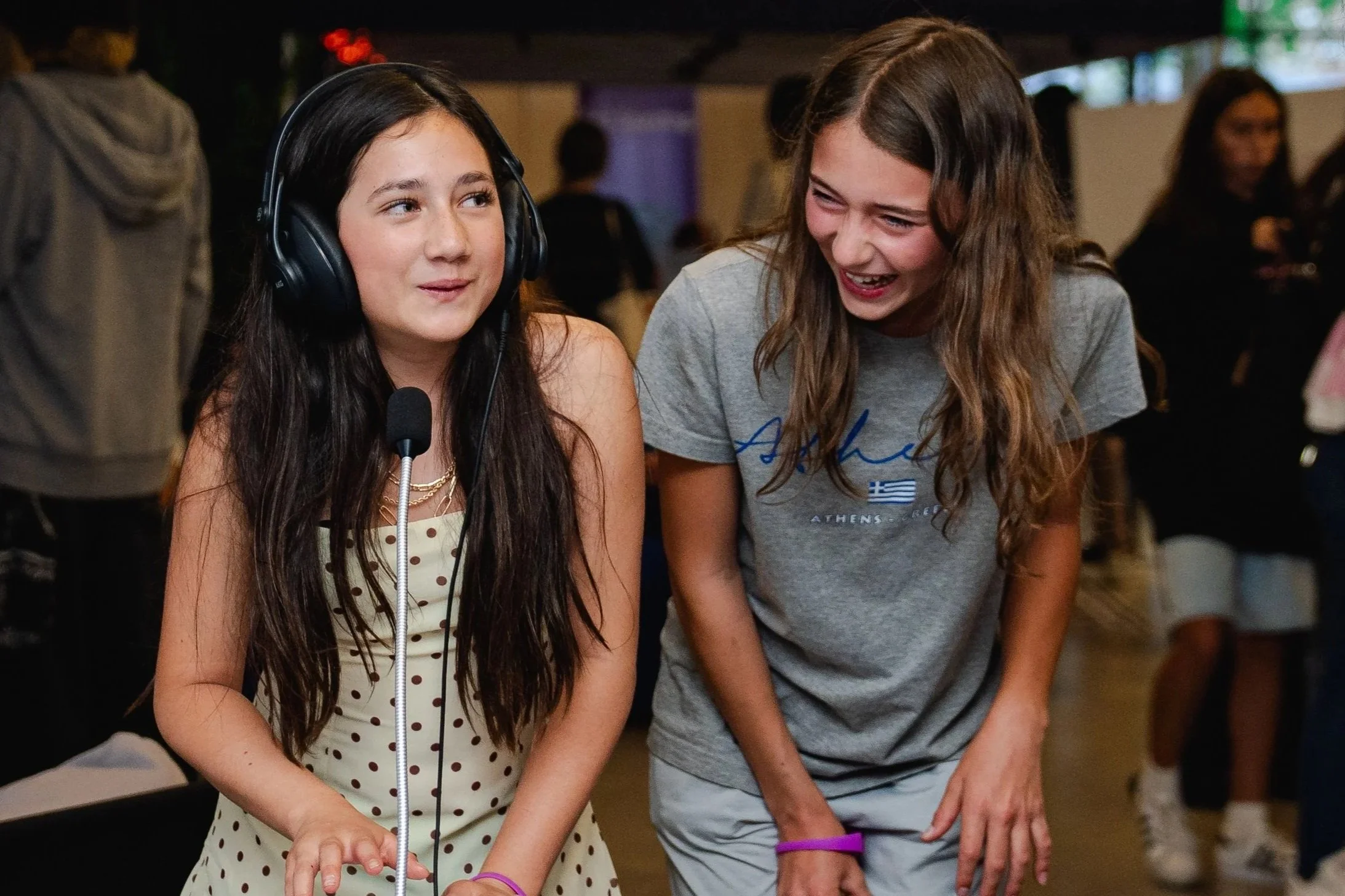
UCLA Lab School students enjoying recording their voices.
Elementary Podcasting at UCLA Lab School
At UCLA Lab School, the masterful music teacher Alanah Maguire led her elementary classes in producing debate podcasts. Her classes argue which of two opposites is better with two student hosts and an adult judge. Their topics were Cats vs. Dogs, Sweet vs. Spicy, Hobbies vs. Sports, etc. Students wrote their own lines, practiced them, and recorded them with the Ms. Maguire’s help.
Nothing about this was language intervention. It was a regular class doing a project they thought was fun. And when we asked students what they got better at, they did not say audio editing. They said:
“Talking with confidence."
“Sharing my ideas and showing what I think."
“Thinking of examples and what I want to talk about."
One student came in wanting to “get better at being confident at sharing my ideas" and left saying they had improved at “speaking into a microphone and sharing my voice." Another said the thing that helped most was "when we wrote it down," and that they got better at “speaking my ideas." Writing fed the speaking and the speaking fed the writing. That’s a literacy loop!
Ms. Maguire said it plainly: with podcasting, “those who don't have the strongest voice could be heard." That is the whole effect in miniature. The microphone lowers the floor. The kid who will not raise their hand in class will talk into a mic and then use both audio and literacy tools to get it to sound right.
All of the pilot teachers found the resources helpful too. Ms. Maguire described the relief of opening our graphic organizers and finding “a place where my brain can rest. I'm not searching, I'm not putting all this stuff together, this is where the info lives." Approachable for the teacher, engaging for the student. That combination is part of how podcasting can thrive in all learning environments.
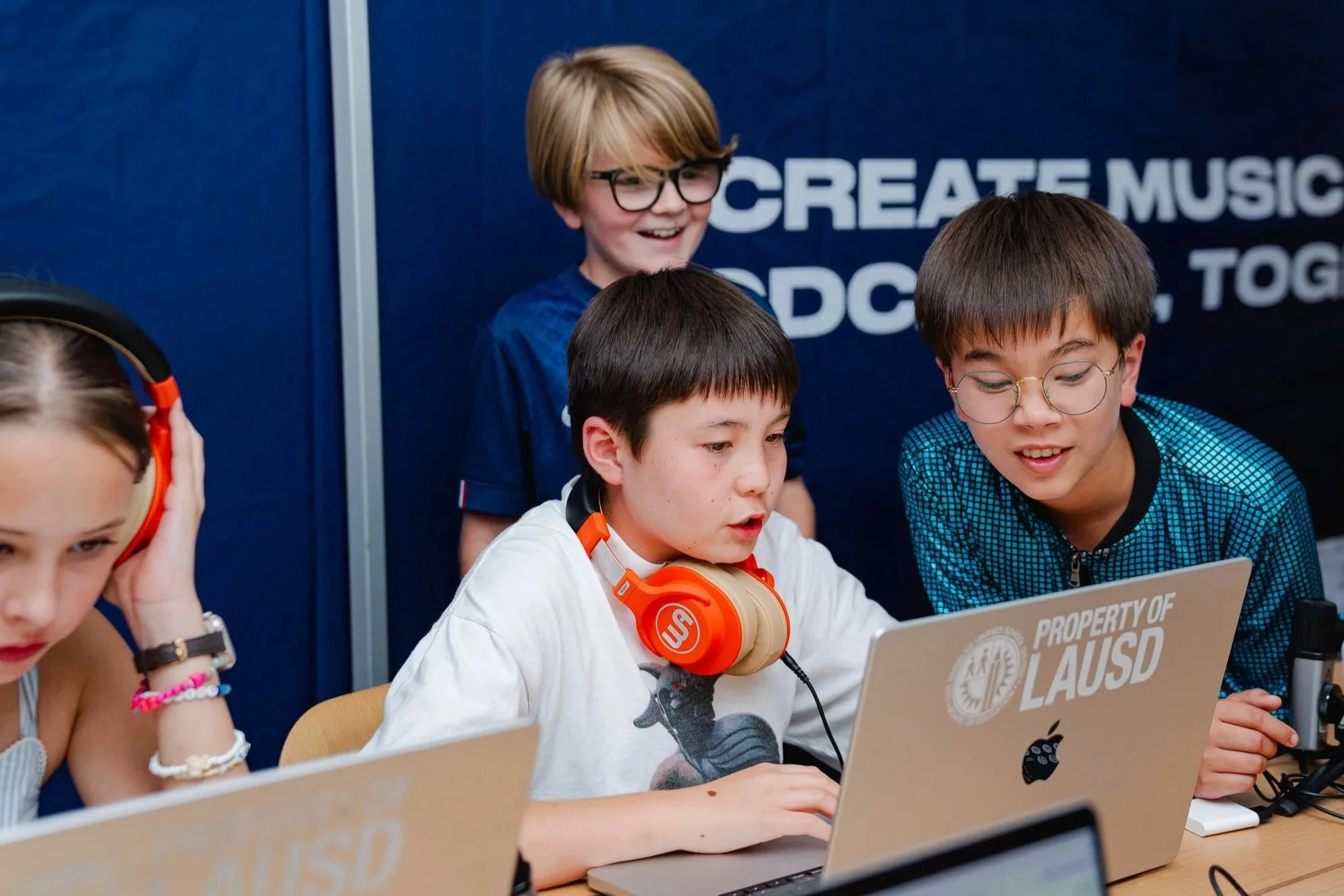
Students using Soundtrap and an Apogee MiC Plus.
Podcasting for English learners at KIPP Heritage Academy
Alejandra Ceja runs ELD pullout at KIPP Heritage Academy, working with 5th through 8th graders still classified as English learners. Her group built a podcast called “Volleyball Legends." Three weeks in, this is how she described it:
“In three weeks, I got the most sustained English practice I've gotten all year."
Her newcomers, the students with the least English, are the hardest to keep in the target language. They often slip back to their first language the second the pressure rises. The mic reversed that:
“As soon as that microphone went in front of the newcomers, they stuck to speaking English the longest I've ever gotten them to stick to speaking English."
Then the podcasting process got students doing things automatically that she usually has to teach directly. Her students worked out on their own that a podcast cannot run on one-word answers:
“They understood that the conversation needs to continue. You can't just answer yes or no and stop."
And hearing themselves back did what a worksheet can’t: it turned them into their own editors:
“Them hearing themselves was actually quite a turning point. Like, ‘this is what I'm sounding like? This is what my podcast is sounding like?’ They're like, ‘oh no, that part needs to get cut out.’"
That last quote is the self-monitoring that language researchers have documented happening on its own, in a middle school pullout room, with no one teaching it as a skill. The recording made their speech hold still long enough to inspect it, the way writing does, and they started to revise.
The part that matters most to anyone who works in intervention is what podcasting did to how the work felt. Students who have spent years in pullout know they’re struggling:
“By the time they get to eighth grade and they're still in ELD, they are starting to feel like ‘I'm dumb.' Every curriculum that we have is an intervention workbook. This format did not feel like that remedial thing. It almost tricked them."
And the result was the thing every intervention teacher is chasing:
“I did not have as many students all year wanting to come back to do their project until this project. They were bugging me and bugging me and coming to my room like, can we work on it?"
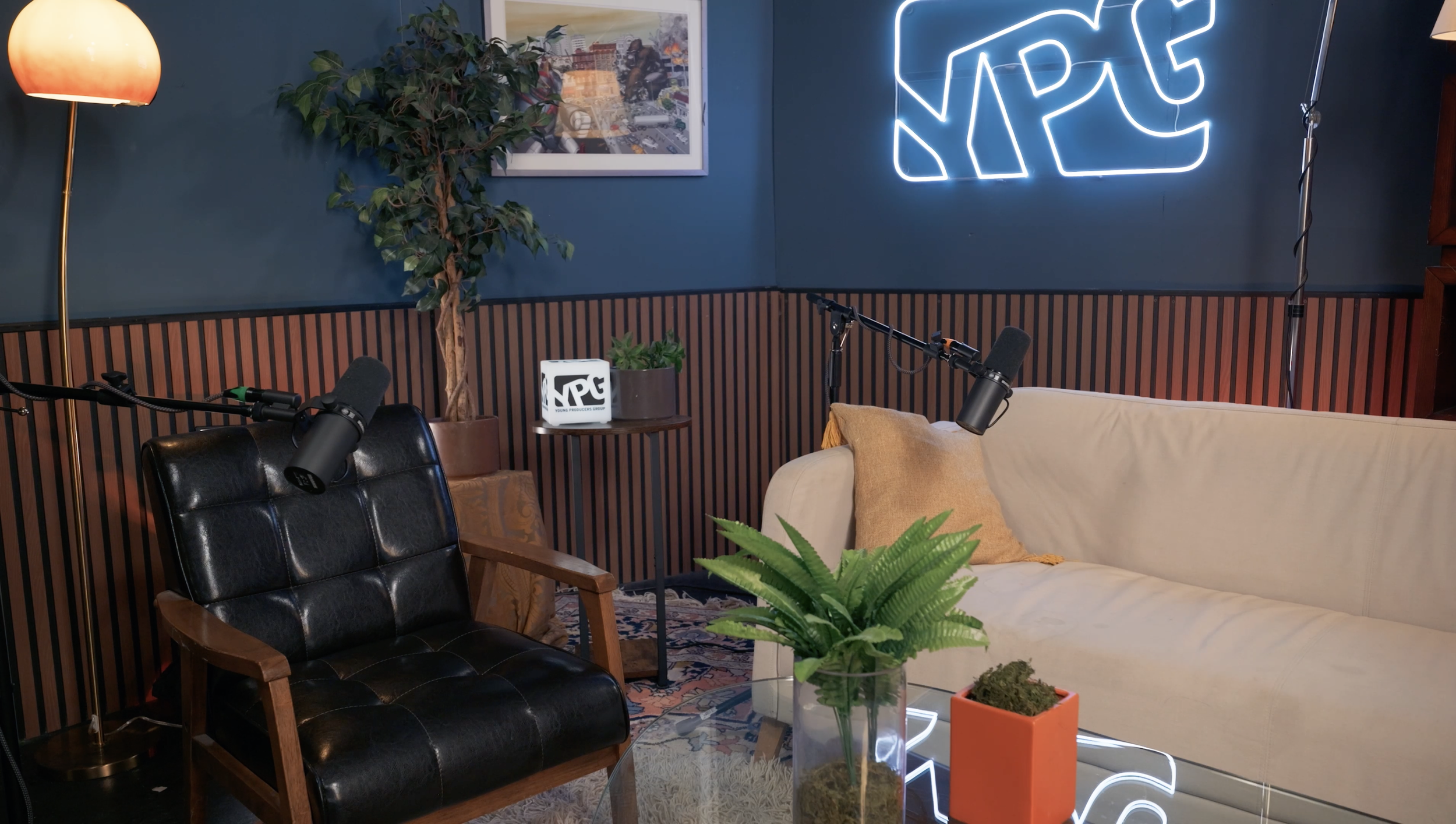
Two mics and a podcast studio: an ELA and ELD engine in disguise.
Why Podcasting Develops Literacy, Not Just Talk
You could call this oracy and stop there. The kids talked more than before…but that’s just the activity, not the result. What makes audio a literacy tool instead of just a nice change of pace is what happens underneath the talking. Four things were doing that work:
Production at low pressure. Recording removes the live audience. There is no room full of peers watching you struggle, so students speak longer and take more risks than they do in a normal speaking activity. More language comes out, which is the precondition for everything else.
Recording as a mirror. When students hear themselves back, they become editors of their own speech. They catch pronunciation, they notice when an idea falls flat, they cut what does not work. That is self-monitoring and revision, the same cognitive move writing is prized for, except it works for students who cannot yet get their thinking onto a page. The recording gives spoken language the one property writing always had: it holds still so you can examine it.
Elaboration over compliance. A podcast demands more than yes-or-no, and students know it, because they already know what a good podcast sounds like. They extend their reasoning because the form asks for it, not because a worksheet told them to. The medium teaches the skill.
No intervention stigma. For students carrying years of remedial framing, the fact that this does not feel like a workbook is not cosmetic. It is the difference between resisting the work and asking to come back to it. Engagement is not the goal, but it is the thing without which none of the rest happens.
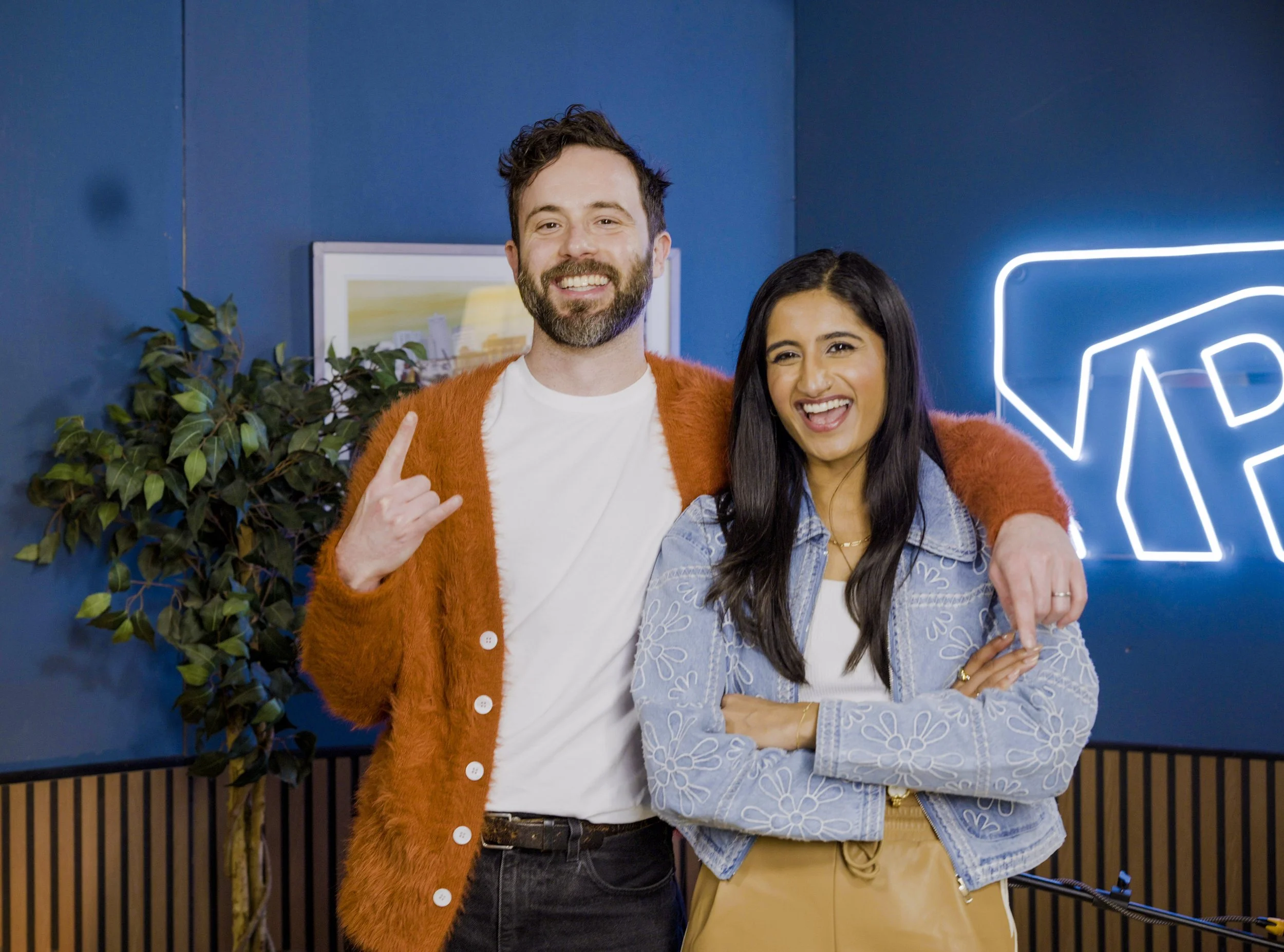
YPG Podcasting Resources hosts Lawrence Grey and Arasha.
Where This Goes
None of this is specific to language learning. ELD newcomers are the clearest case because the gap between what they can say and what they want to say is the widest, so the effect is impossible to miss. But the same engine runs anywhere students need to talk through an idea, hear how it actually lands, and decide what to fix. A book discussion. A science explanation. A history debate. The elementary class arguing about cats and dogs was running on the exact same machinery as Alejandra's volleyball podcast.
What keeps showing up underneath every version of this is engagement, and not the kind you manufacture with points and prizes. Students worked harder because the work was theirs. A worksheet captures whether a student complied. A recording captures the student: how they think, how they sound, what they chose to say and what they cut. When the thing being made is that personal, and when someone is actually going to hear it, students stop performing school and start doing real work. The learning outcomes follow from that.
This is the whole reason YPG exists. Our mission is to elevate student voice, and a microphone carries out that mission literally and figuratively. It takes the quietest kid in the room, the one who would never raise a hand, and gives their thinking a place to live where it cannot be talked over. The students said it better than we can. Asked what they got better at, they did not name a skill. They said they got better at sharing their voices.
Want to run this in your own classroom? Our guide to podcasting in the classroom walks through formats, tools, and a free project to get started.