Podcasting in the Classroom: Lesson Plans, Projects, and Resources That Build Literacy and Student Voice
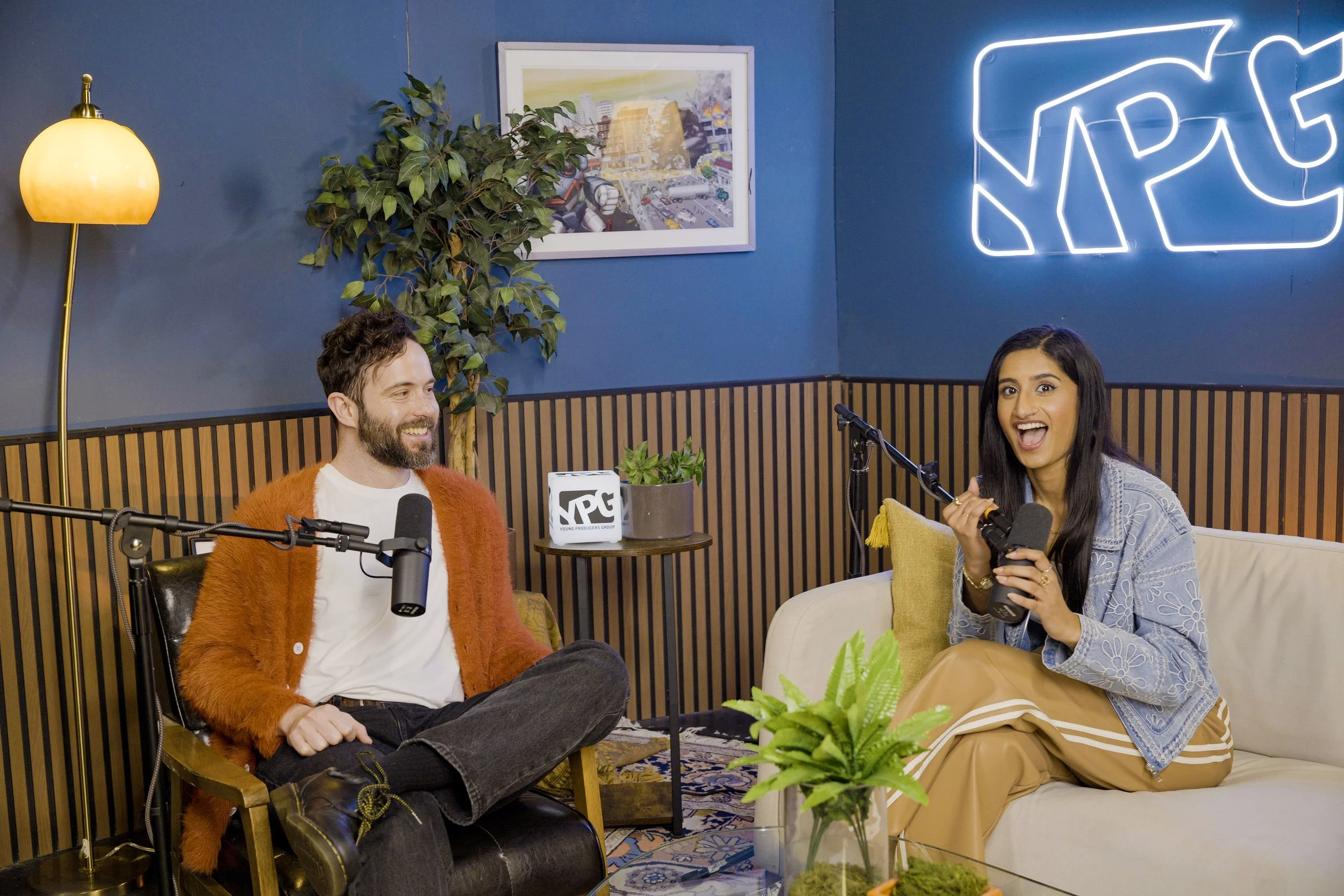
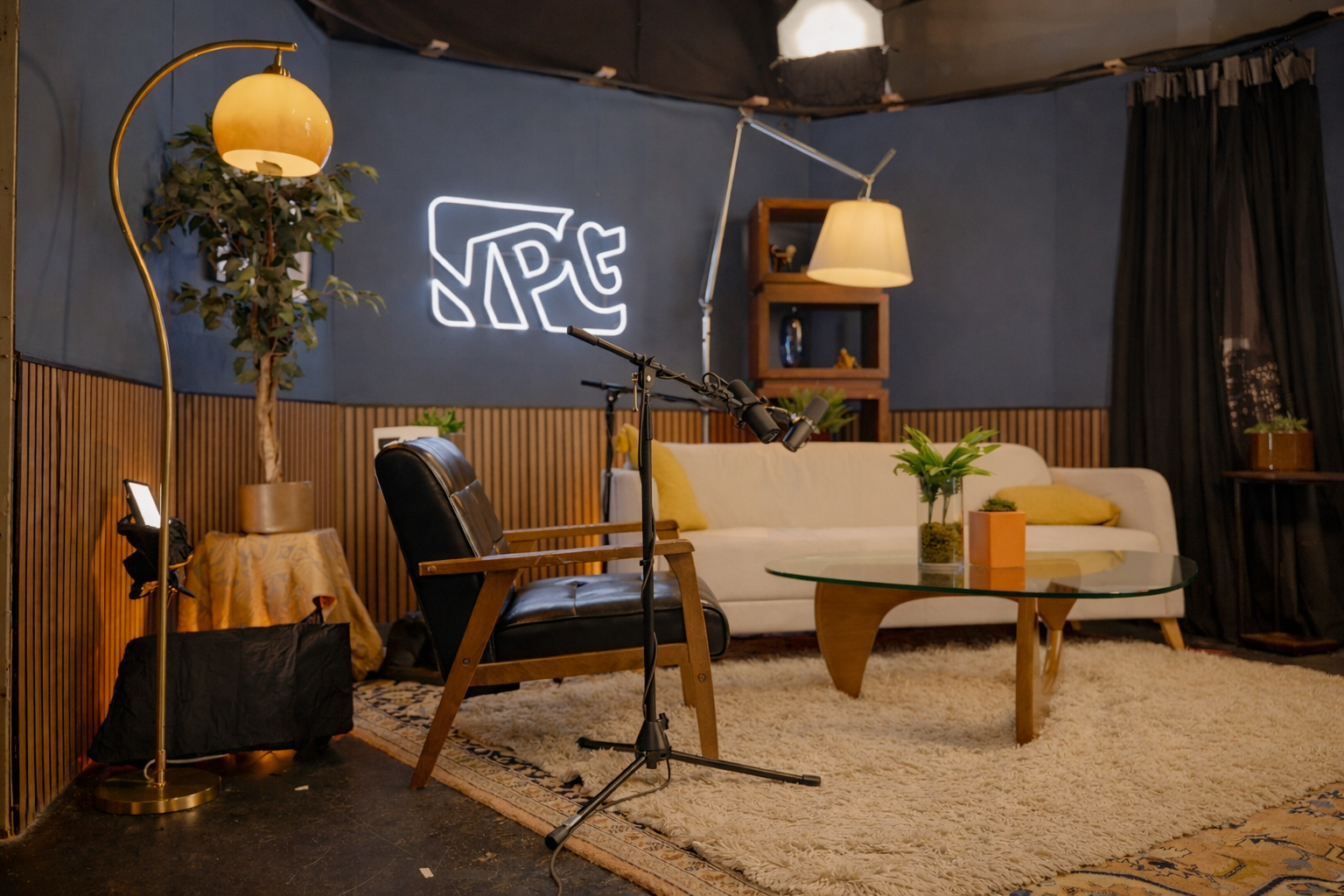
YPG Executive Director Lawrence Grey with podcaster, comedian, and YouTuber Arasha filming the new YPG Podcasting Resources.
Podcasting helps students tell their stories, personalize the learning process, and connect authentically with their peers and larger communities—all while strengthening essential literacy skills that have been declining across the U.S. for decades. When students create podcasts, they develop their thinking before they write, find their voices as communicators, and learn how to shape messages for real audiences. Just as importantly, they can do this work in ways that are culturally sustaining, relevant, and firmly rooted in the media landscape they already know.
Gone are the days of literacy development being the sole job of the English teacher. Literacy is increasingly understood as a cross-disciplinary practice that’s developed and reinforced across all academic subjects:
History: students can narrate pivotal events or interview historical figures, or tell stories from multiple perspectives.
Science: students can explain complex concepts, debate hypotheses, or translate data into language their peers understand, making science accessible and engaging.
World language: students can record podcasts in a target language, telling stories, presenting cultural insights, and practicing conversation and fluency.
Creative/performing subjects: students can review works of art, compose mini-performances, or interview peers and professionals, sharing creativity in music, media, and design.
The possibilities are endless because literacy lives everywhere, and podcasting lets students share it creatively.
At Young Producers Group, we center student voice and cultural relevance in everything we do—from helping young producers make the music they actually listen to (as explored in Why We Should Teach the Music Our Students Actually Listen To) to supporting teachers in designing creative, project-based learning that mirrors real-world music making (as discussed in From the Classroom to the Studio: Teaching Music Production with Project-Based Learning). Podcasting extends that same philosophy into the literacy space, giving students a platform to think deeply, speak confidently, and connect what they’re learning to who they are.
Podcasting aligns perfectly with that mission because:
It invites student voice, perspective, and story first.
It honors oral traditions, home vernacular language, and cultural context.
It interacts with media that students already consume: social media, YouTube, audio podcasts, etc.
Below, you’ll find practical approaches, classroom-ready podcast formats, and accessible tools that make podcasting not just possible, but truly transformative for both students and teachers.
Why Podcasting Is a Powerful Literacy Tool
Podcasting is an authentic literacy development tool in the classroom because it allows students to communicate in ways that reflect who they are, while engaging in the same research, revision, and audience-focused thinking used in real-world communication. Rather than practicing literacy in isolation, students use reading, writing, speaking, and listening together to make meaning and communicate something real.
A well-designed podcast project activates all four core literacy domains in an integrated way:
Reading: Students research topics, analyze sources, and review scripts or outlines to clarify their thinking.
Writing: Students plan episodes, draft and revise language, and reorganize ideas to better serve a listener. Many students record podcasts using more informal, home vernacular, then translate those ideas into essays written in more academic language.
Speaking: Students practice articulation, pacing, tone, and emphasis as they perform their ideas aloud.
Listening: Students listen closely during interviews, respond to peers, evaluate their own recordings, and give and receive feedback.
When students know their podcasts will be heard by an authentic audience of their classmates, families, and wider communities, their approach shifts. Language becomes more intentional, and effort increases because students understand that the conversation around their work extends beyond feedback and a grade from their teacher. And the audience isn’t just reading words on a page, they’re hearing the students’ actual voices!
Podcasting is best understood as a creative composition process. Like writing an essay or composing a piece of music, it involves planning, drafting, revising, and refining ideas over time. The microphone captures the final product, but the literacy work happens throughout the entire process.
Organizations like Edutopia and Reading Rockets have long emphasized speaking, listening, and storytelling as foundational literacy practices. Podcasting brings those practices into classrooms in a format that feels contemporary, accessible, and deeply human.
Podcast Formats That Work in Schools (and Mirror the Real Podcast Industry)
At YPG, we organize podcasting around the same core formats used across the industry. These formats translate naturally into middle and high school classrooms while supporting different learning goals and content areas.
Interview Podcasts
Interview-based podcasts are one of the most accessible entry points for students. They emphasize listening, question design, and responsive conversation.
In classrooms, interview podcasts often involve:
Peer interviews around shared experiences or interests
Conversations with family members or community figures
Content-area interviews where one student takes on the role of “expert”
Interview formats teach students how to prepare thoughtful questions, listen actively, follow up in real time, and shape a conversation for an audience, all core literacy and communication skills.
Narrative Podcasts
Narrative podcasts center storytelling. They are structured, intentional, and often scripted, making them a powerful bridge between writing and audio.
In schools, narrative podcasts might include:
Personal stories connected to identity or growth
Historical narratives told from a first-person or investigative perspective
Reflections on books, music, or cultural moments
With a focus on character and story, narrative podcasts pair especially well with ELA, social studies, and arts-based coursework. Students can also make use of sound design and music in the DAW to heighten the storytelling and impact of their pieces.
Chat Podcasts
Chat-style podcasts are more informal, but they’re ripe for rich discussion and debate. They focus on dialogue, perspective, and collaborative meaning-making.
In classroom settings, these often show up as:
Small-group discussions around a shared topic
Guided conversations responding to texts or current events
Student-led panels where roles are clearly defined
This format supports collaboration and critical listening, skills that are difficult to practice authentically in traditional assignments.
Other Podcast Formats
It’s worth noting that there are two other established podcast formats in the industry: documentary and news. While these formats are powerful, we’ve intentionally centered around interview, narrative, and chat formats to reinforce accessibility and repeatability in standard classroom settings. Documentary and news podcasts often require longer timelines, heavier research, and more complex production workflows, making them better suited as extensions once students have mastered the fundamentals. (Big thanks to Yowei Shaw of NPR’s Invisibilia fame for helping us clarify our thinking and materials around formats! Be sure to check out her amazing show Proxy.)
By grounding classroom podcasting in real, recognizable industry formats, teachers give students a clear framework for creativity—one that feels authentic, rigorous, and connected to the world beyond school.
Podcasting Tools That Work in Schools
With a very light technical and financial footprint, Podcasting is extremely accessible for schools. On the software side, any digital audio workstation or editing program can meet the very basic needs.
Soundtrap is the most widely used platform for podcasting in the classroom. With cloud-based recording, collaborative editing, and lots of scaffolds put up for students, Soundtrap removes many common tech hurdles. The Transcription Feature is amazing: transcribe your recordings, edit the text, and Soundtrap edits the audio for you…pretty futuristic stuff!
Tip: If you’re new to audio creation, the free Soundtrap Teacher Certification Program offers a self-paced introduction to digital audio and podcast projects designed specifically for educators.
Podcasting Equipment for the Classroom
The equipment needed to start podcasting in school is minimal, and many classrooms already have what they need.
At a basic level, classroom podcasting can work with:
Student devices (Chromebooks, laptops, or tablets)
Digital Audio Workstation
Headphones or earbuds
Built-in microphones
For a small upgrade, clearer audio goes a long way:
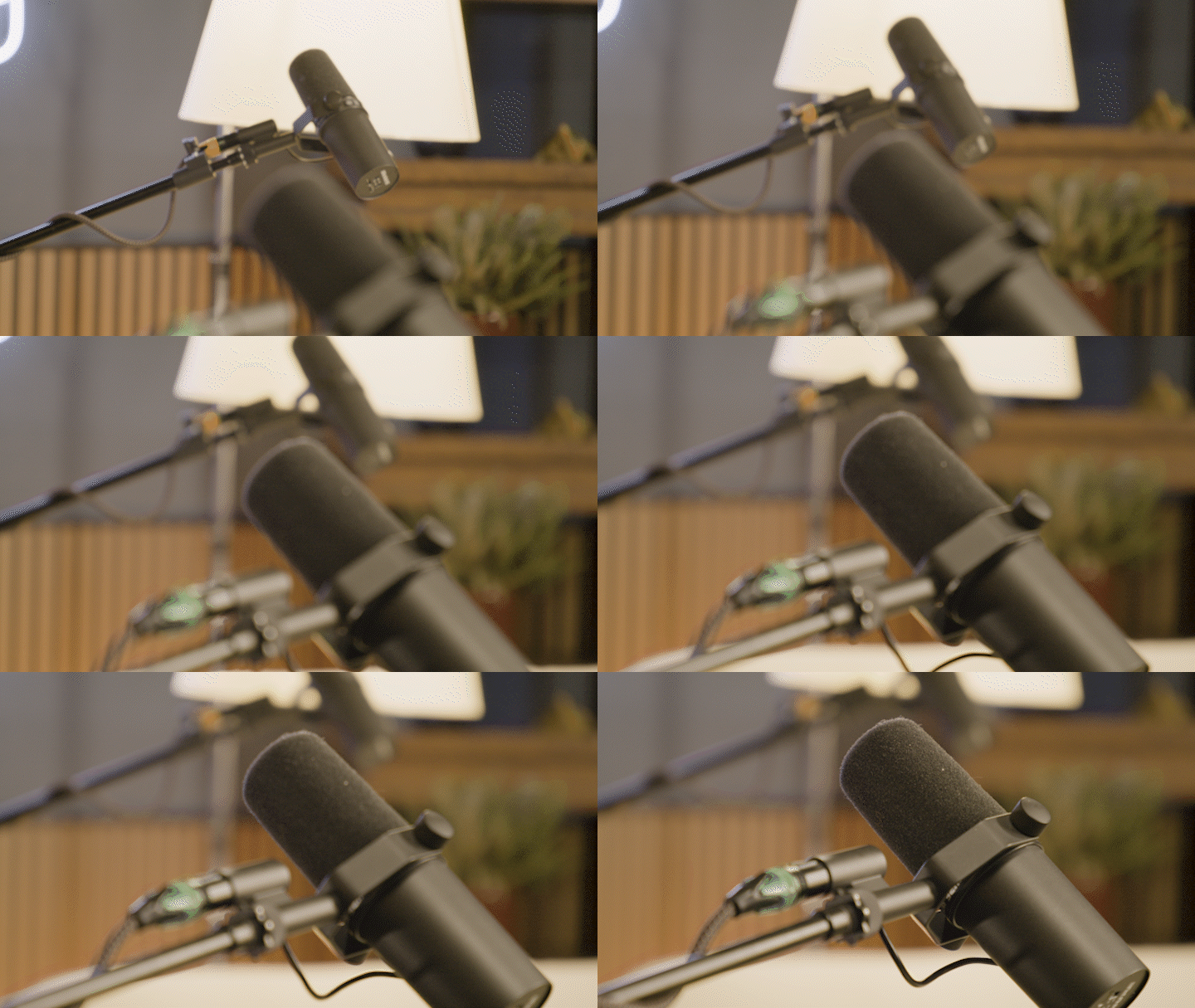
Microphones, XLR or USB microphones
Audio interface
Simple mic stands or desk mounts (optional)
That’s it. No studio, no complex gear, no large investment.
A Free Podcasting Project for Your Classroom
Here’s a free podcasting project you can use right away:
Classroom-Ready Podcast Prompt: Peer Interview
Format: Interview
Intent: Reflect, Connect
Group Size: Pairs
Suggested Length: 2–4 minutes
Prompt:
Sit down with a classmate and interview them about something meaningful happening in their life right now. This could be a big event, a personal milestone, or something they’re working hard toward—such as a sports game, family change, test, or creative project.
Your role as the interviewer is not just to ask questions, but to listen closely, respond with curiosity, and help your classmate share their story clearly and thoughtfully.
Elements to Include:
A brief introduction of your guest and the topic
Clear, respectful interview questions, including:
What is something meaningful happening in your life right now?
What does that look like day to day? Describe what’s happening.
How do you think your life will change after this?
At least one follow-up question based on what your guest says
A short closing reflection from the interviewer:
What did you learn about your classmate?
Did your view of them shift or deepen?
Teacher Notes (Optional Constraints):
Encourage students to record in short sections rather than all at once
Emphasize listening and follow-up questions over “perfect” answers
Students can submit the audio along with their question list or reflection
Extension (Optional):
Have students translate the interview into a short written reflection or profile paragraph, shifting from spoken language into more academic writing.
The above is just one example from our larger podcasting prompt bank. Our full podcasting resources expand on this approach with additional prompts and formats, all accompanied by extensive graphic organizers and lesson plan guidance.
Final Thought
At Young Producers Group, we believe every student has a story worth telling—and that schools should give students the tools and structures to tell those stories well. Podcasting offers one of the most accessible ways to do that, blending literacy, creativity, and real-world communication in a format students recognize and care about.
Our podcasting resources are built around this belief. They’re designed to help teachers support student voice through clear formats, intentional processes, and classroom-ready prompts that work across subjects and grade levels. When students are given space to speak, listen, and reflect, podcasting becomes more than a project—it becomes a way for students to see themselves as creators, active participants in the new media landscape.
👉 Explore YPG’s Podcasting Resources to see how we support podcasting in real classrooms.