
Teaching with Intention: Student Voice, Creativity, and Assessment in the Modern Classroom
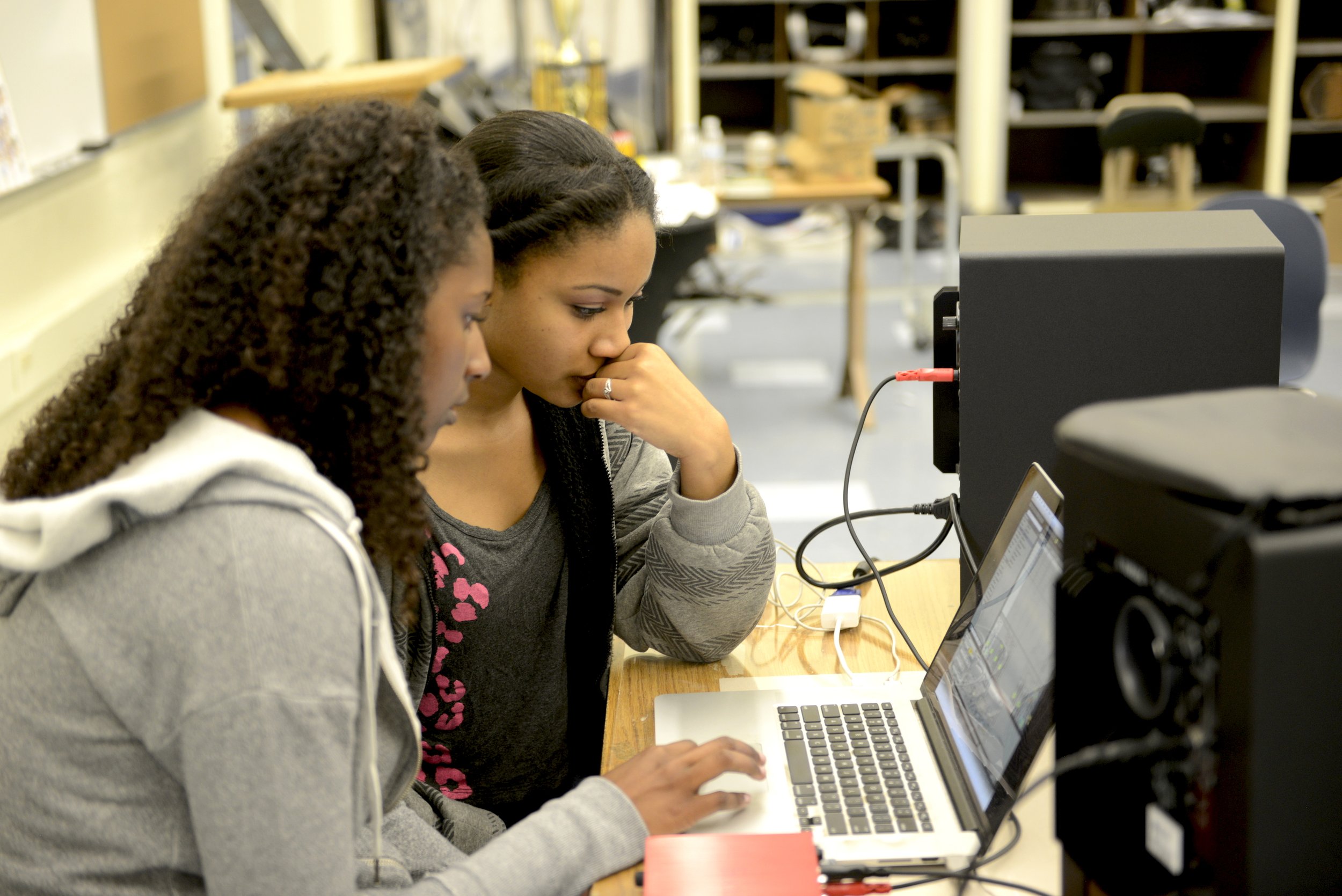
LAUSD students making original music with Ableton Live.
Traditional top-down education models treat students like empty vessels, assuming that without the teacher’s knowledge, they would otherwise know nothing. Classrooms become sterile environments where students check their cultures and personalities at the door and sit obediently for an hour. This model has never met students’ needs.
With AI reshaping the modern working world and the nature of knowledge itself, it makes even less sense to tell students to speak only when spoken to and follow the rules. If school is just about picking the right answer between A, B, C, or D, students will continue to be held to outdated standards and prepared for a future that’s already passed.
What students need now more than ever is self-knowledge, creativity, and the ability to communicate. They need to explore the space between A and B, and they need to do it together. They need to create and communicate, tapping into the unique well of their personhood while grappling with the output of others as they do the same.
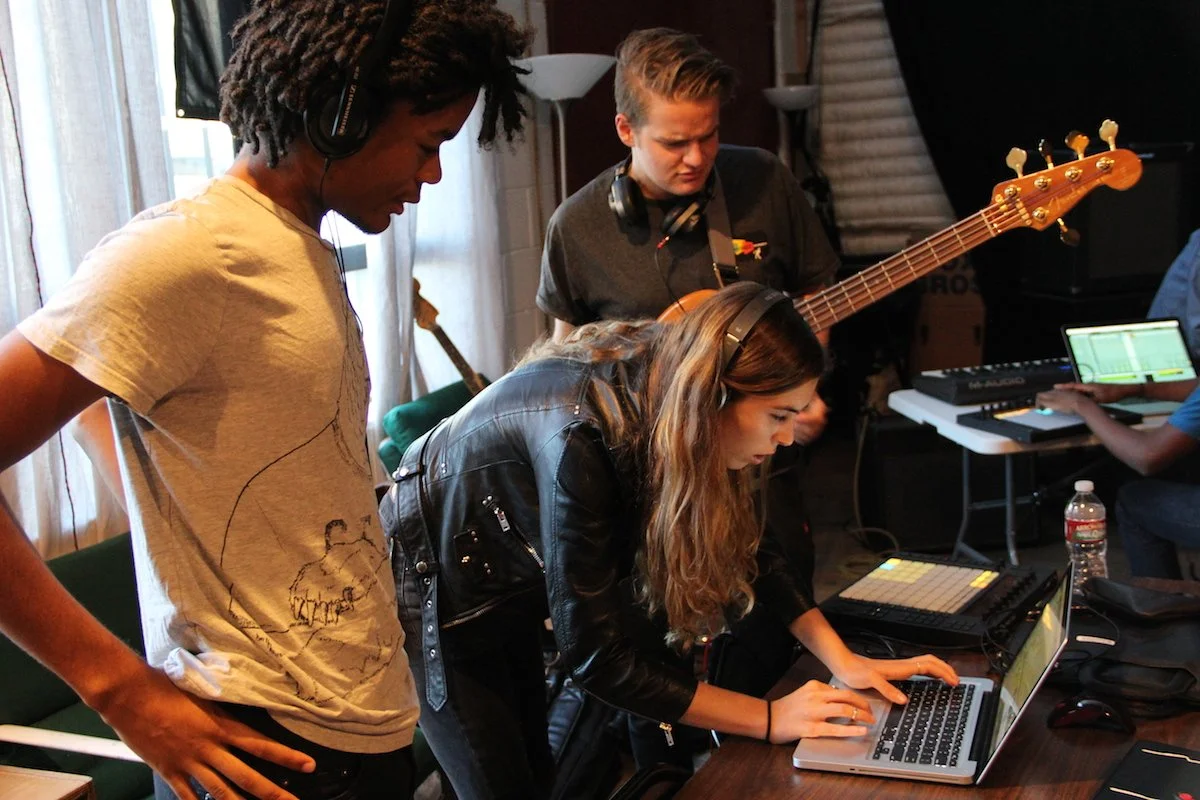
Students making music together at a YPG workshop, finding their voices and making space for others’.
Chrissy Tignor, Professor of Music Industry Studies at Cal Poly Pomona, wrote on the YPG Blog:
Unlike performance-based assessments where students either hit the right notes or they don’t, original music is shaped by personal taste and cultural influences. There is no right or wrong answer, so the key to assessing creativity is ensuring that students can justify and explain their artistic choices. The ultimate goal isn’t to impose the teacher’s musical tastes but to facilitate students’ creative growth, even when their artistic choices differ from the teacher’s own.
Moving from a top-down, hierarchical model to a creative community approach brings its own challenges. If all tastes are valid and there’s no clear right or wrong, which way is up? Traditionally, there’s a band director, a math teacher, or another authority figure grading with a big red pen. So how do we measure growth without a fixed standard?
The clearest answer came during YPG’s first Teacher Get-Together, an online series where we bring together forward-thinking music and audio teachers to connect, learn, and level up. Click here to sign up for the next session happening on Zoom on April 21st, 2026.
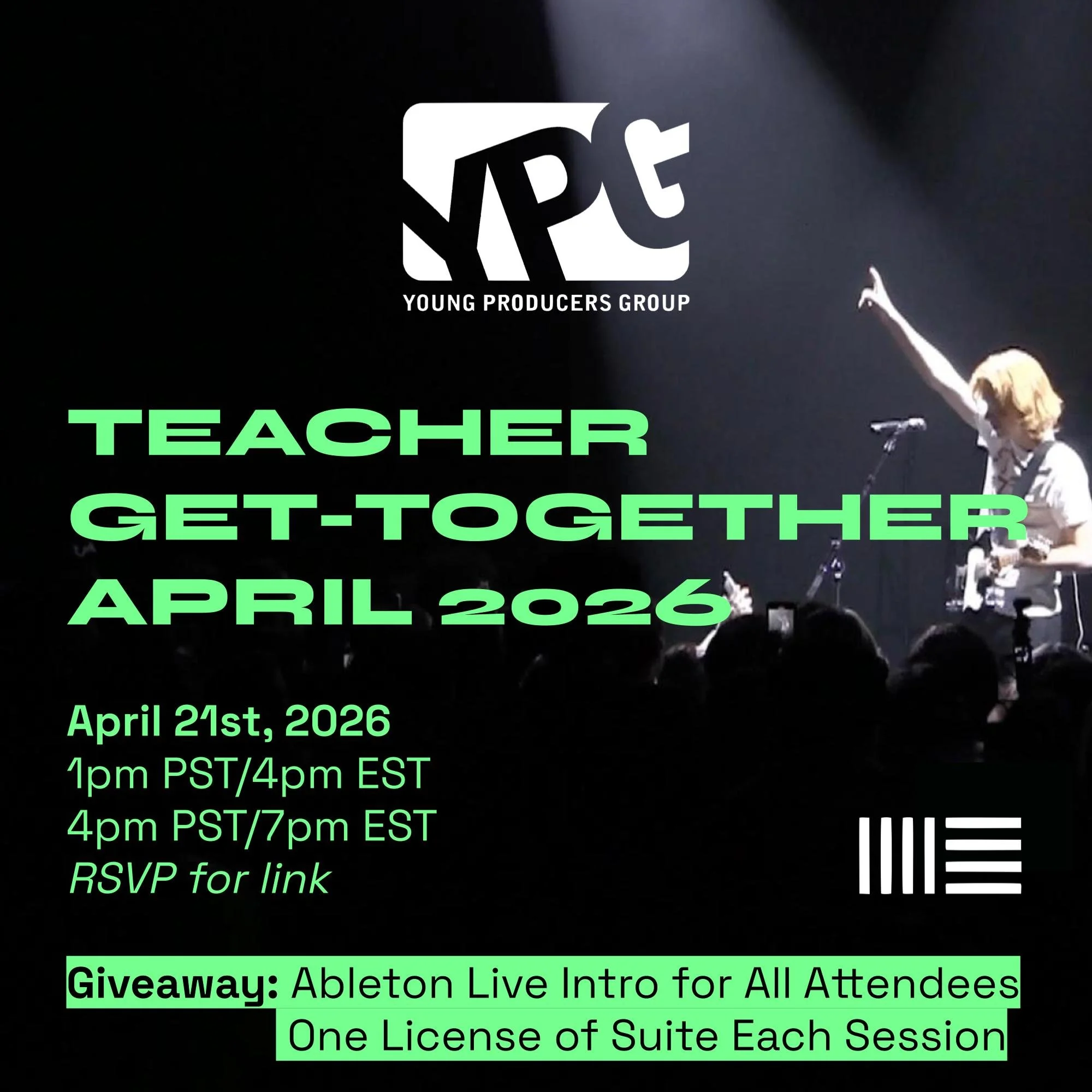
The next YPG Teacher Get-Togethers are on April 21, 2026. Sign up here!
In a discussion about what works teaching music technology, the conversation turned to Listening Parties. These share-outs at the end of projects are a core part of YPG pedagogy and curricula.
As teachers compared approaches, Jake Cassman, music teacher at the UCLA Geffen Academy, captured it perfectly:
Ask the artist what their intentions are… what you're really asking is, ‘is this piece effective?’ What’s effective depends on what the artist is trying to accomplish. You need to get to the bottom of what they’re trying to accomplish before you can determine if it’s working.
Jake distilled a truly student-centered perspective: you meet students where they are. They’re not empty vessels. They already have momentum. The teacher’s role is to help them move faster and with more clarity toward their goals, not impose their own.
Students can set their own standards by clearly defining their intentions. The teacher holds each student accountable to their goals while building a rigorous class culture for the group. It’s easy for students to set the bar low for themselves, especially when traditional models of schooling reward getting good grades with as little effort as possible. If the teacher creates a culture in the classroom that rewards ambition, vision, and execution, students will work hard not just to get an A, but because they actually believe in what they’re doing.
To realize their goals, students still need to develop real skills and techniques. Even without top-down pressure, 2+2 is still 4, and a major scale is still built from a certain combination of whole and half steps. Students need to hit these traditional standards to get where they are trying to go. The knowledge is aligned with their intentions. And when the classroom connects to the real world with Career Technical Education curricula and events like the SoCal Beat Battle, students see that clear intentions and hard work can lead to professional opportunity.
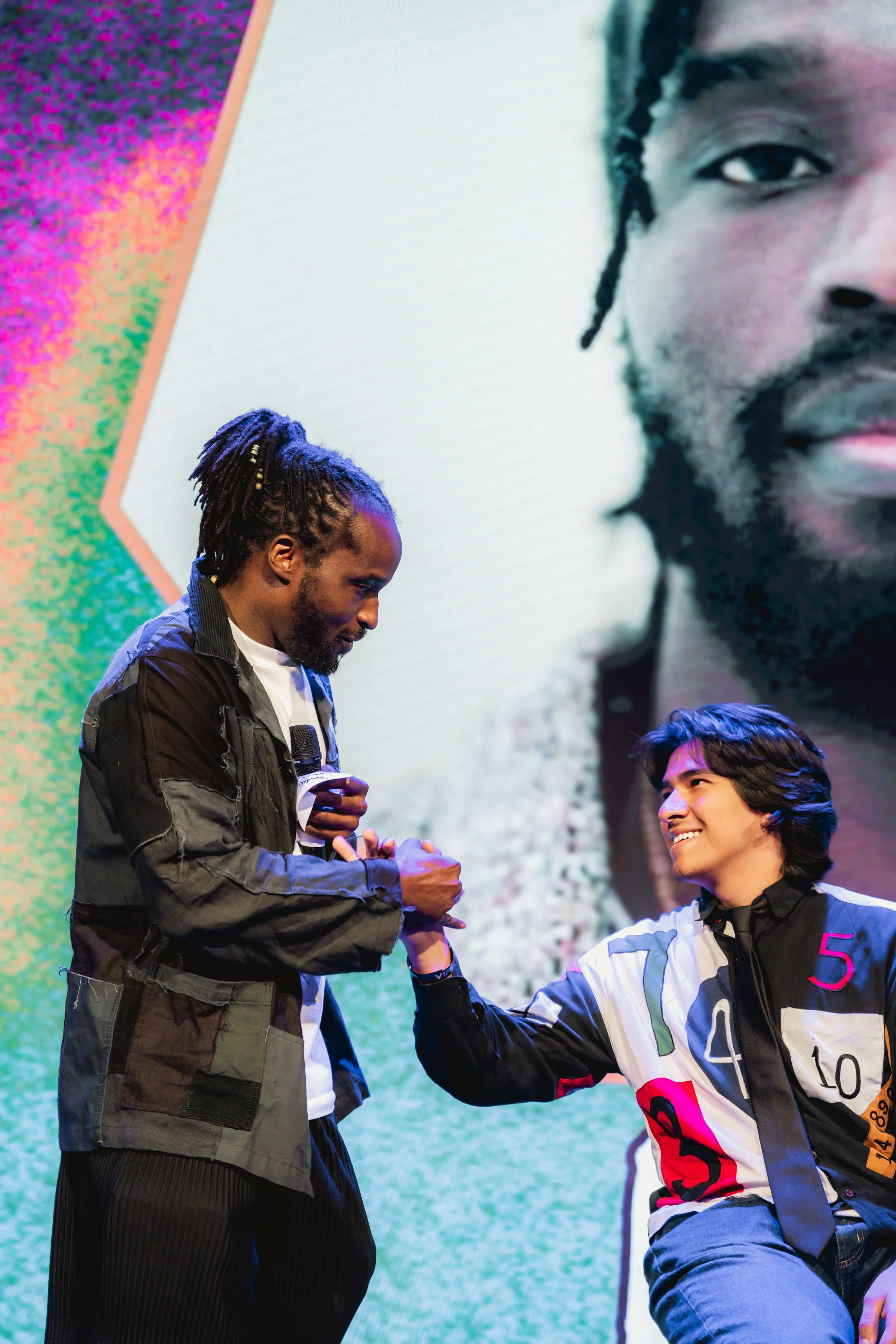
1st place winner Adam Gonzalez shaking hands with SoCal Beat Battle Judge, Grammy-winner, and multi-platinum producer Dj Dahi after winning the Producer Category.
Jake Cassman also pointed out that students, especially younger ones, may not have clear intentions at first. Asking them to define one can feel unfamiliar. But that’s the work. The more students reflect on what they’re trying to accomplish, the more they understand themselves, find their voice, and connect with others.
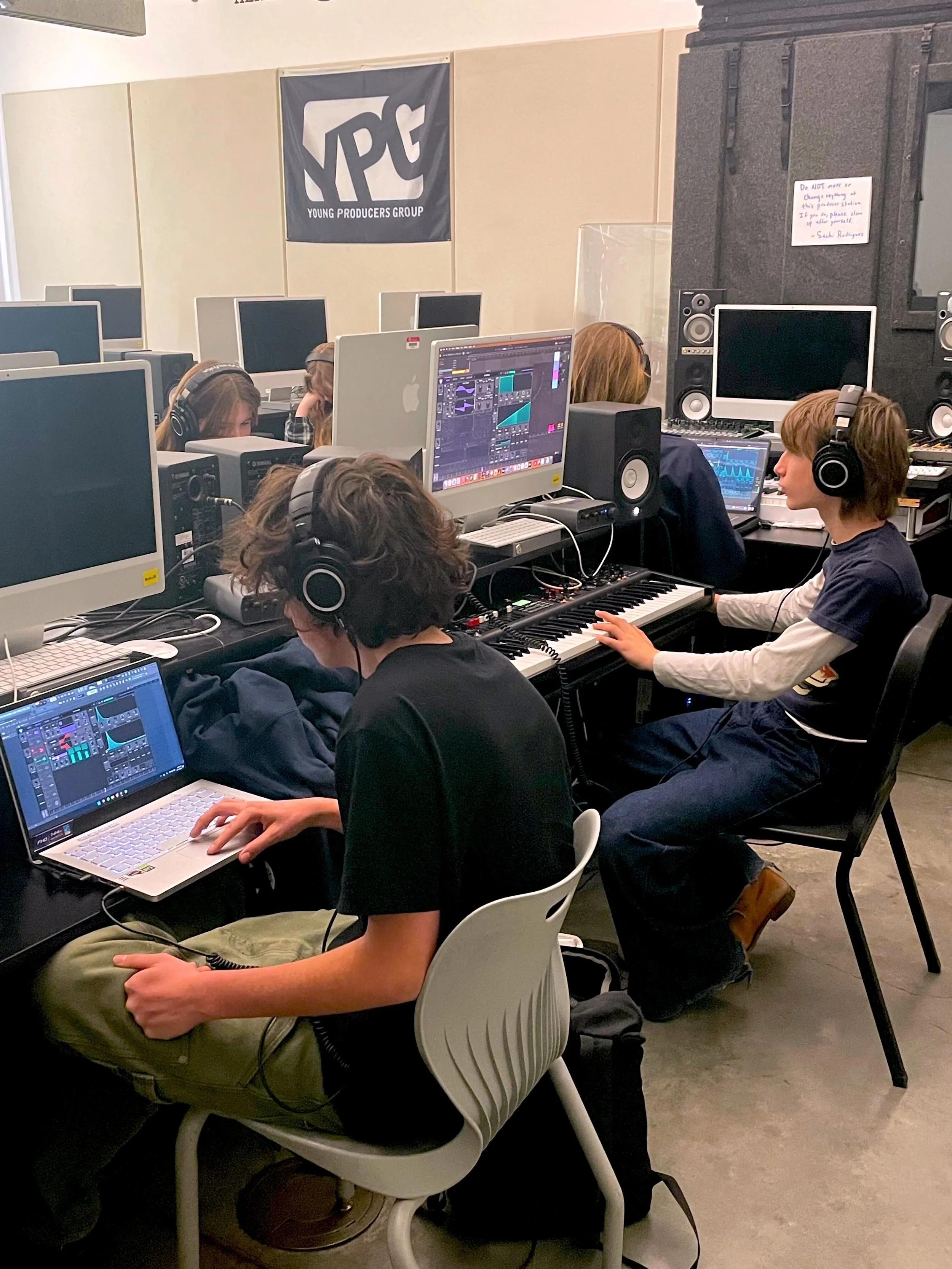
Students locked in, making music during dedicated work time at LACHSA.
Centering intention in the classroom also connects directly to core literacy skills. Students need to know their audience, communicate with a clear point of view, and make decisions about how their ideas come across. Without a defined intention, there is nothing to anchor those choices. Podcasting gives students a structure for doing exactly that.
Having a vision and being able to clearly articulate it is the essential skill set of the modern, AI-proof professional. It starts for students with knowing themselves, setting their intentions, and then executing them. While schools live and die by their standardized test scores, students are going to succeed or fail on their ability to set and meet their intentions.
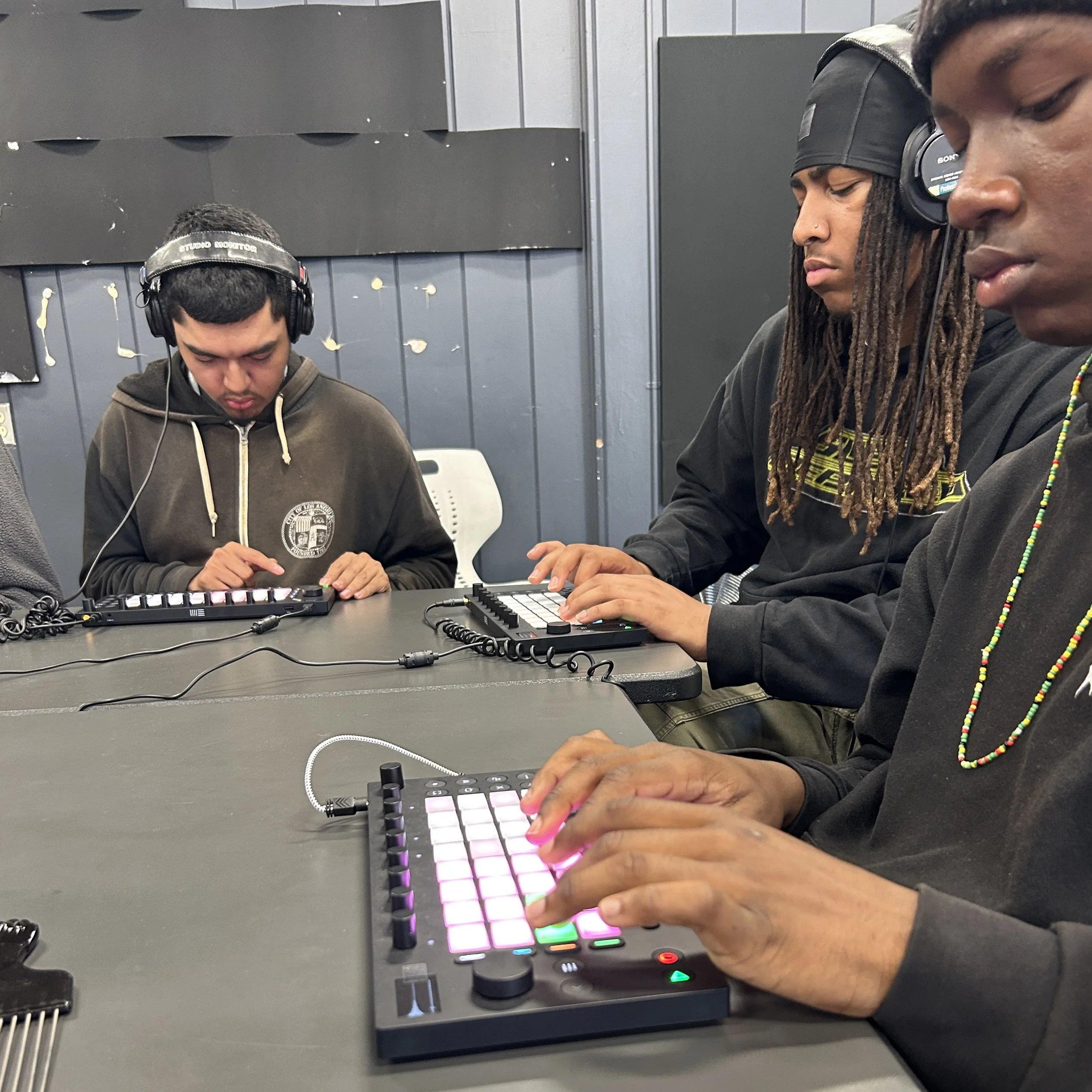
Students in Compton Unified making music in the styles that speak to them on Ableton Move.