0 to 100: Producing and Podcasting in Two Hours
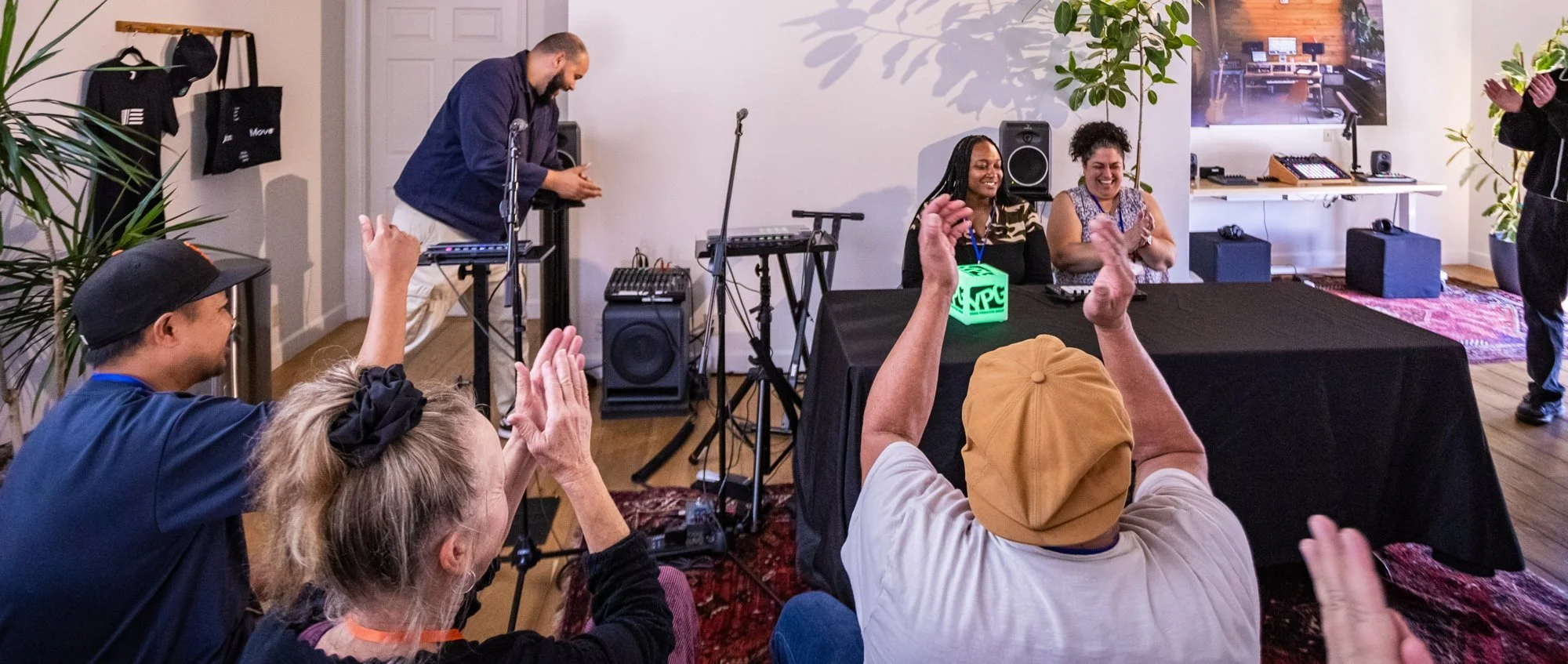
Two teachers sharing their original composition on an Ableton Move at Ableton Spaces.
We threw teachers into the deep end on Friday, 9/25, with two YPG-led field trips during the Creative Educators Network (CEN) Institute Burbank Conference. At 9am, teachers arrived at Ableton Spaces in Pasadena for a workshop on Ableton Live and Move. Most had never used either one. By 11am, they were performing for each other in the Ableton Studio.
Later that day at 1:30pm, a new group arrived at Key Code Media in Burbank for a Podcasting 101 workshop. After a crash course in the basics and some quick scripting, we moved into the Key Code Media podcast studio and shot an episode. By 3:45pm, we had edited it, added graphics, and played it back for the room to big applause!
At YPG, we take a creativity-first approach where student voice always drives the action. Friday put teachers in the students’ seat. We kept the lecturing to a minimum and let them learn through doing. Everybody made something, shared it, and cheered for each other’s work. Creative community is at the heart of how we teach, and it turns out teachers respond to it just as well as students do!
Workshop 1: 0 to 100 with Ableton
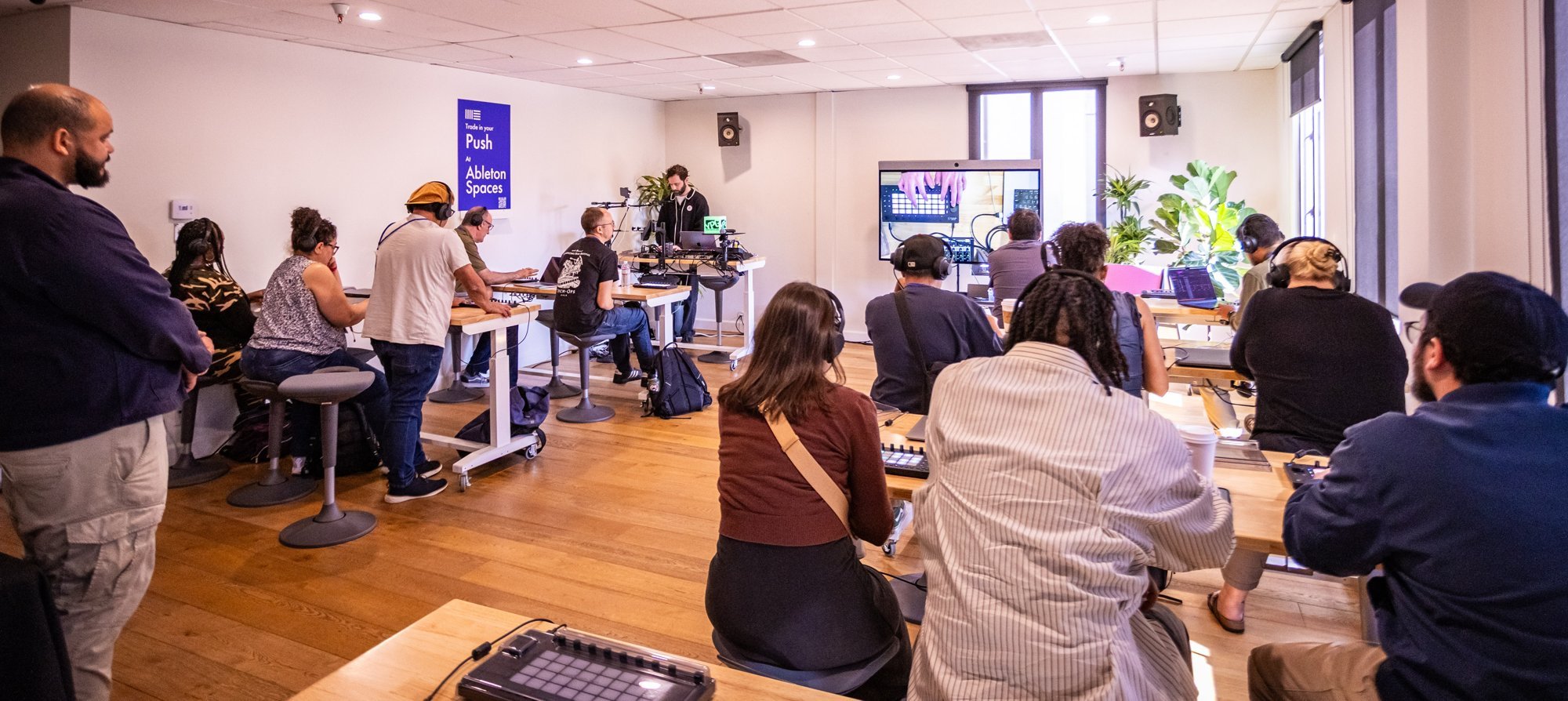
Lawrence demonstrating how to use Ableton Move in the Learning Lounge.
14 teachers signed up for our workshop Produce and Perform like the Pros with Ableton. Whether they knew it or not, they were signing up for a beatmaking baptism by fire. Most of the people in the room had never touched Ableton’s software or hardware before. We had a few teachers with some experience and just one or two legit Ableton users in the room. They looked at me with a mixture of fear and disbelief when I told them that in two hours’ time, they’d be playing whatever they made that morning for each other.
This is the critical moment. As the workshop facilitator, the teacher for that session, I did two essential things that turned their hesitation into motivation:
In that moment, I truly believed that they could do it. In fairness, I’ve done this 0 to 100 workshop twice before and it’s worked both times, so I knew we could do it. But it was a great group of teachers and I knew they were up for it.
I made it clear that we were all operating in a safe space, a workshop environment where the journey far outweighs the destination. I told them I was looking for growth and effort much more so than something “good,” because what does that even mean anyway?? As long as they’re trying, collaborating, and feeding the creative community, then they’re good. Everyone breathed a collective sigh of relief when they realized the pressure was off.
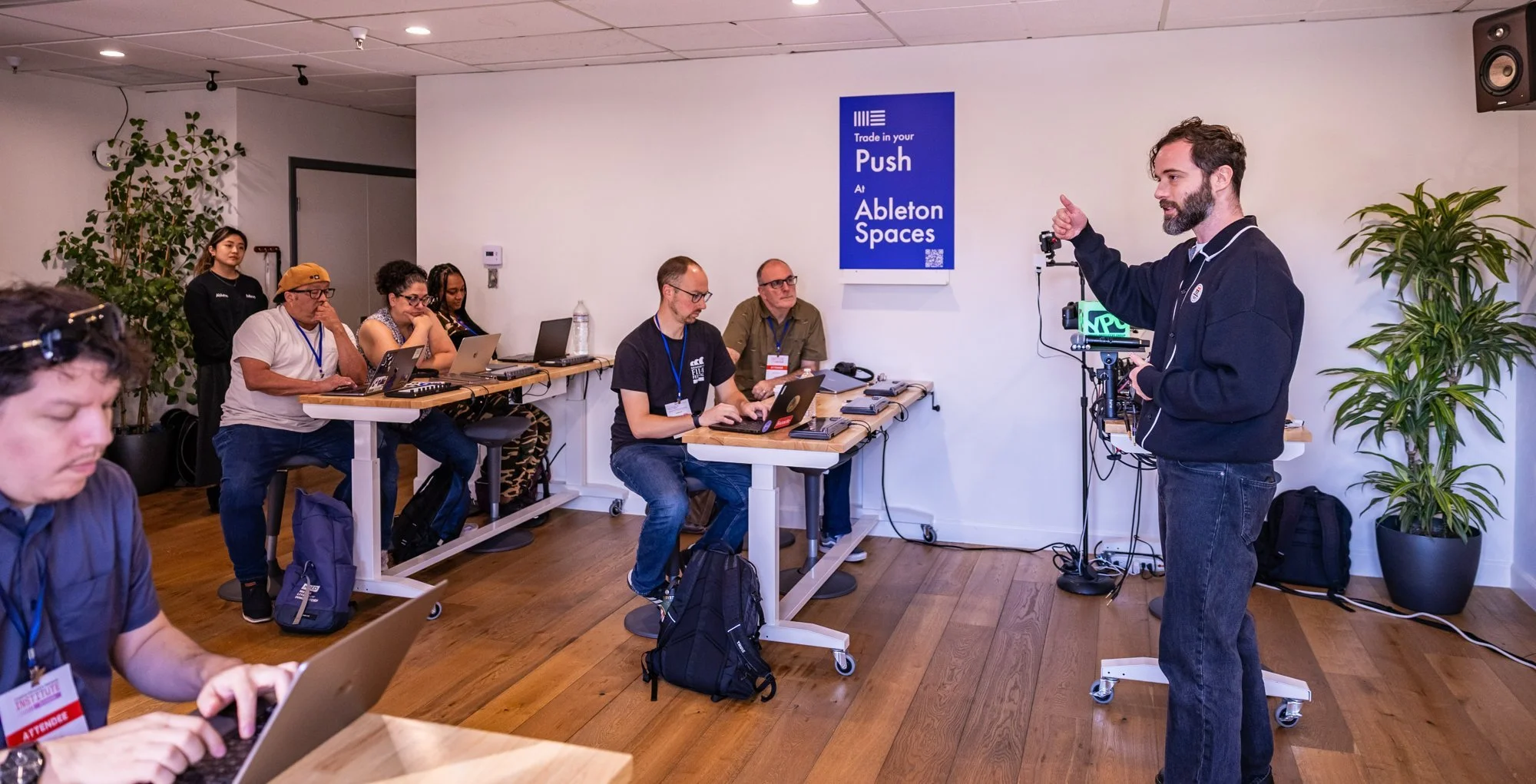
Lawrence leading the lecture on Ableton Live in the Learning Lounge.
We started with a 45-minute crash course in Ableton Live and Move. I covered how to bring in drums and different instruments and how to create parts for each. Then we looked at creating variations to extend those parts into a larger piece of music.
You can (and I do) spend years and years plumbing the depths of Ableton and never get close to hitting the bottom. The point of teaching shouldn’t be to hit a laundry list of techniques or repertoire. It should be about lighting a fire in someone that motivates them to learn what they need to know to do the things that they love. Learning how to load preset instruments and make simple parts is a deeply incomplete window into Ableton, but who cares? The point is the people and the process!
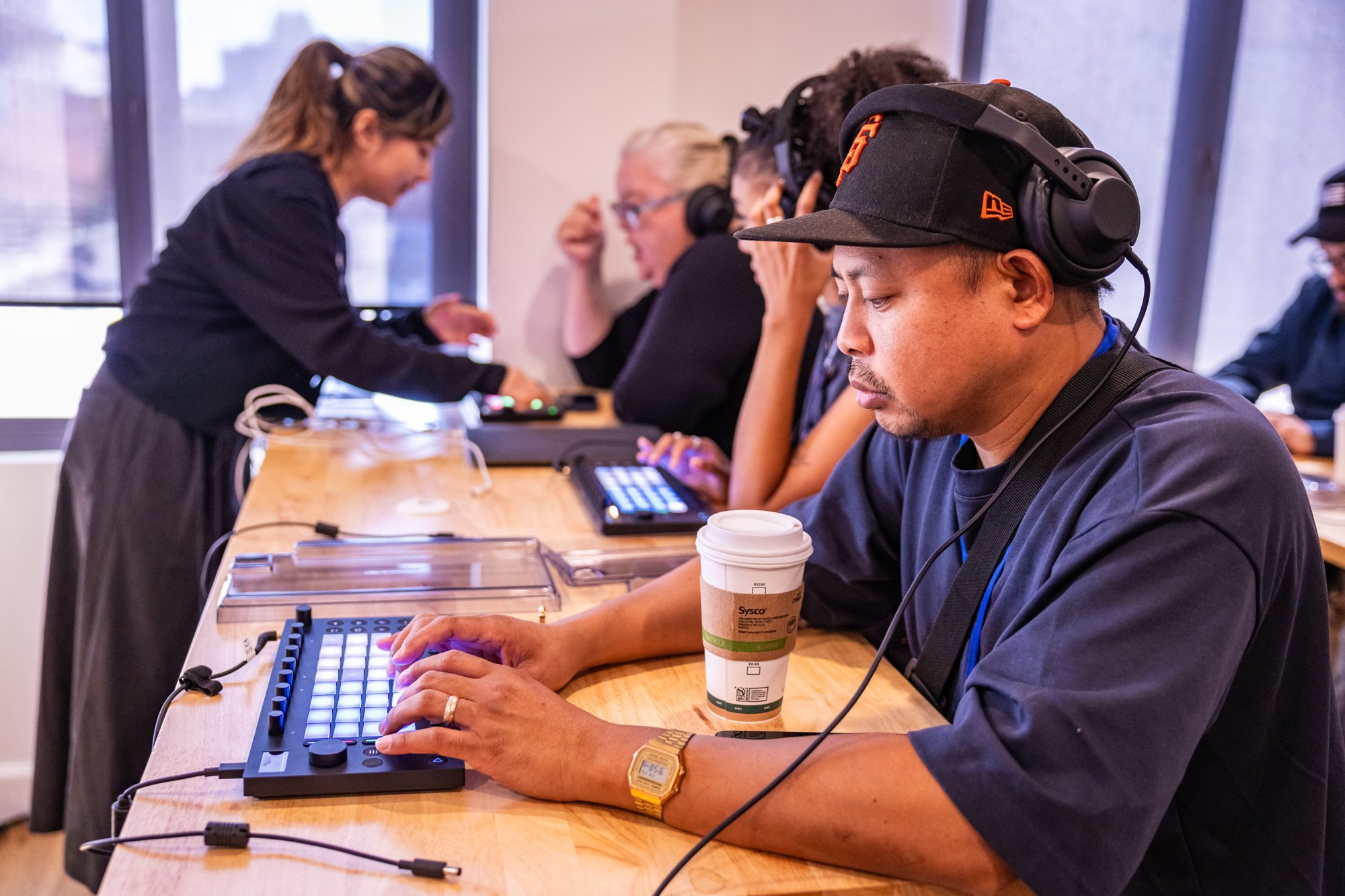
A teacher trying Ableton Move for the first time.
Then, I paired up the folks in the room and gave them an hour to make something together, knowing that they would have to share it with the group in a listening party. Each group got right to it and the YPG team fanned out, circulating and supporting teachers as they worked. Just like in a classroom, there were teachable moments left and right where we dug into the specific concepts and techniques that were relevant to each group’s unique goals.
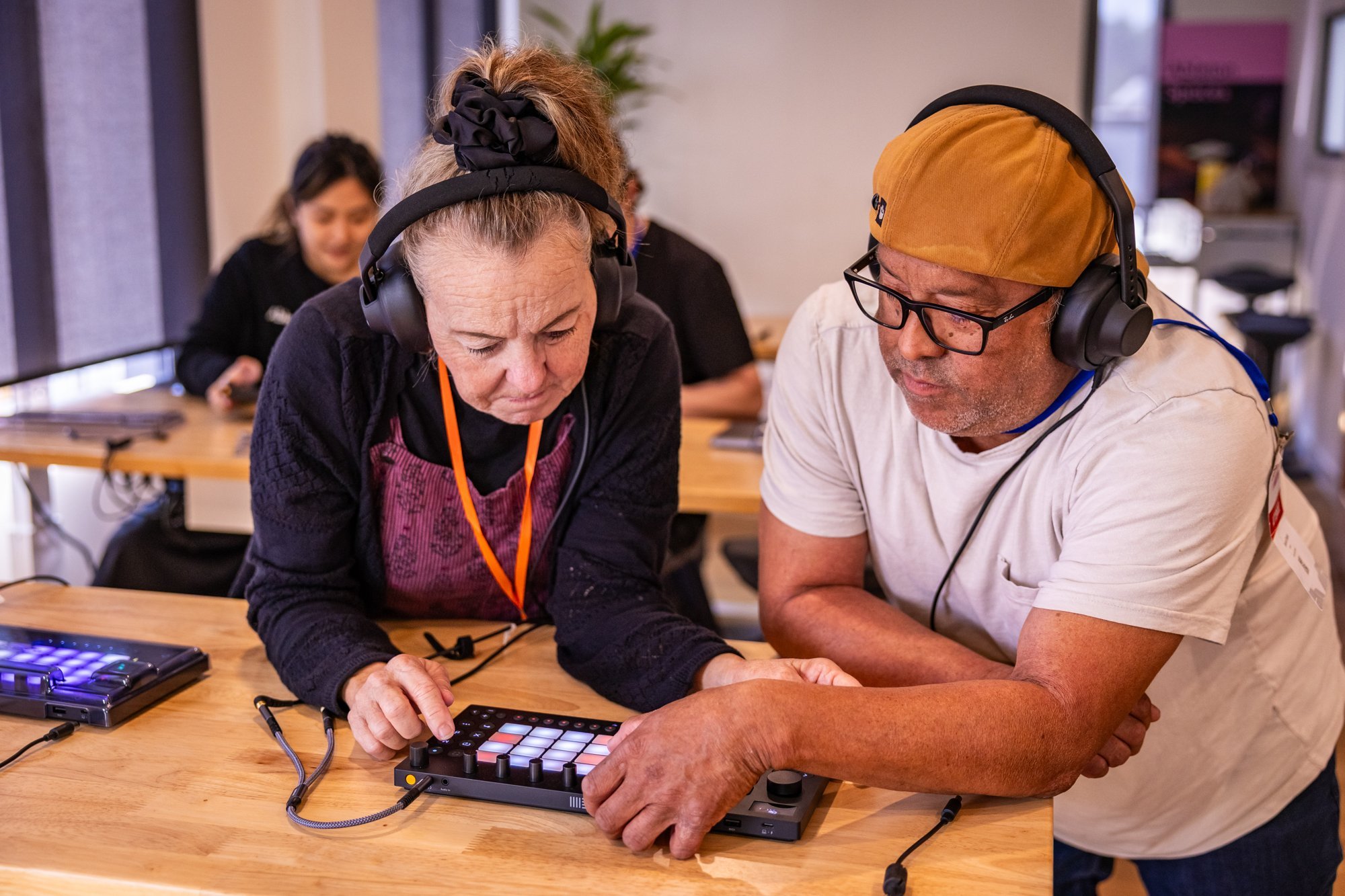
A pair of teachers learning how to use Ableton Move while preparing for their performance.
Some groups elected to focus on Move while others stayed in the box with Live. Immediately, each group went in directions entirely their own, crafting hip hop, EDM, and experimental sounds. Even with just the extremely simple concepts I taught that barely scratch the surface of what is possible with Ableton, the unique essence of each person and the chemistry of the pairs shone through in their music.
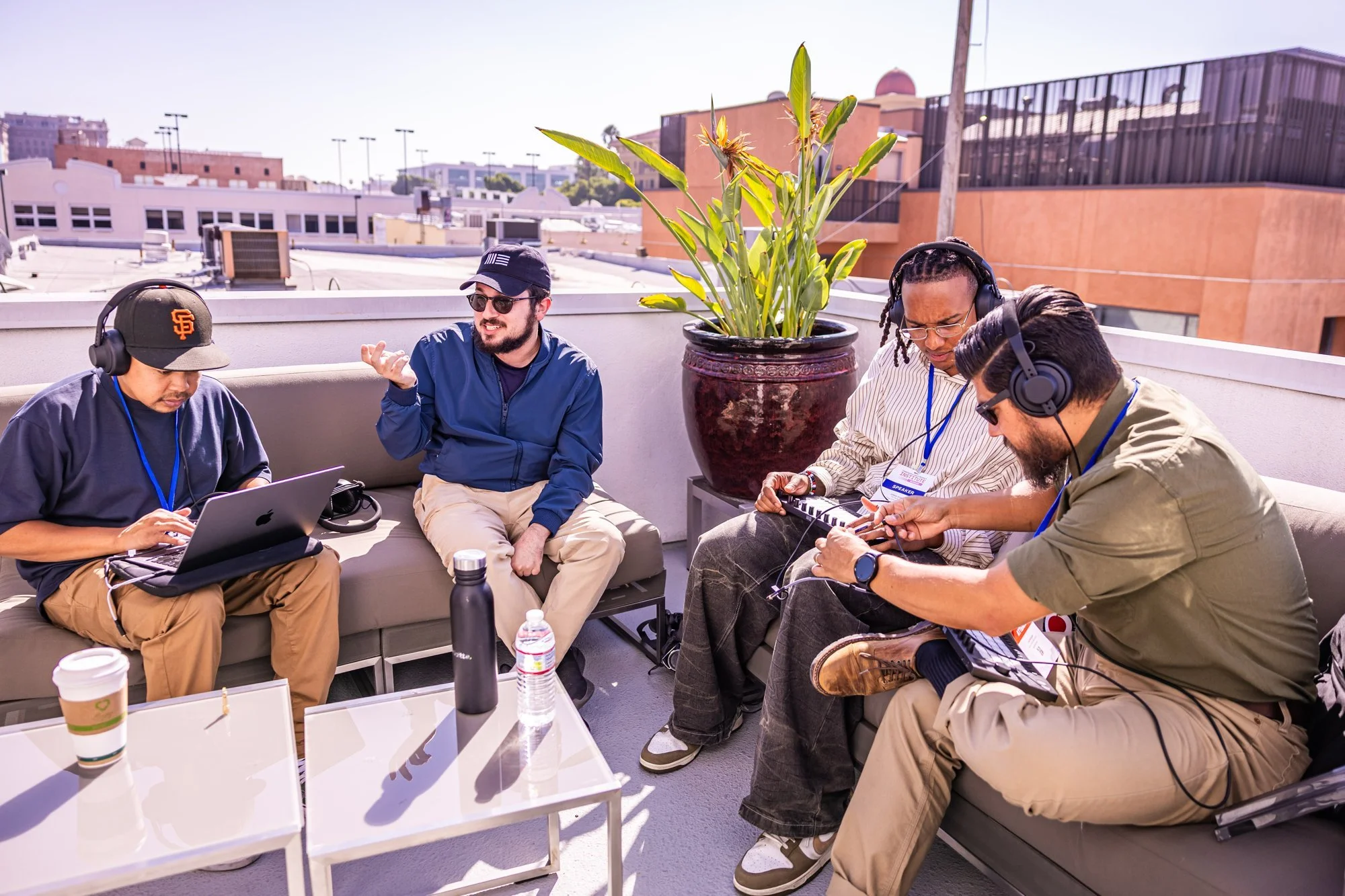
Two pairs of teachers working on the balcony.
When the hour was over, everybody went up to the Ableton Studio for the listening party. Before we got started, I reiterated the expectations of a supportive culture in the room and made it clear that each group would get a round of applause before and after sharing their pieces. This is a staple of the YPG listening party pedagogy. Each group deserves love and support because they are in the community, even one as temporary as ours that day.
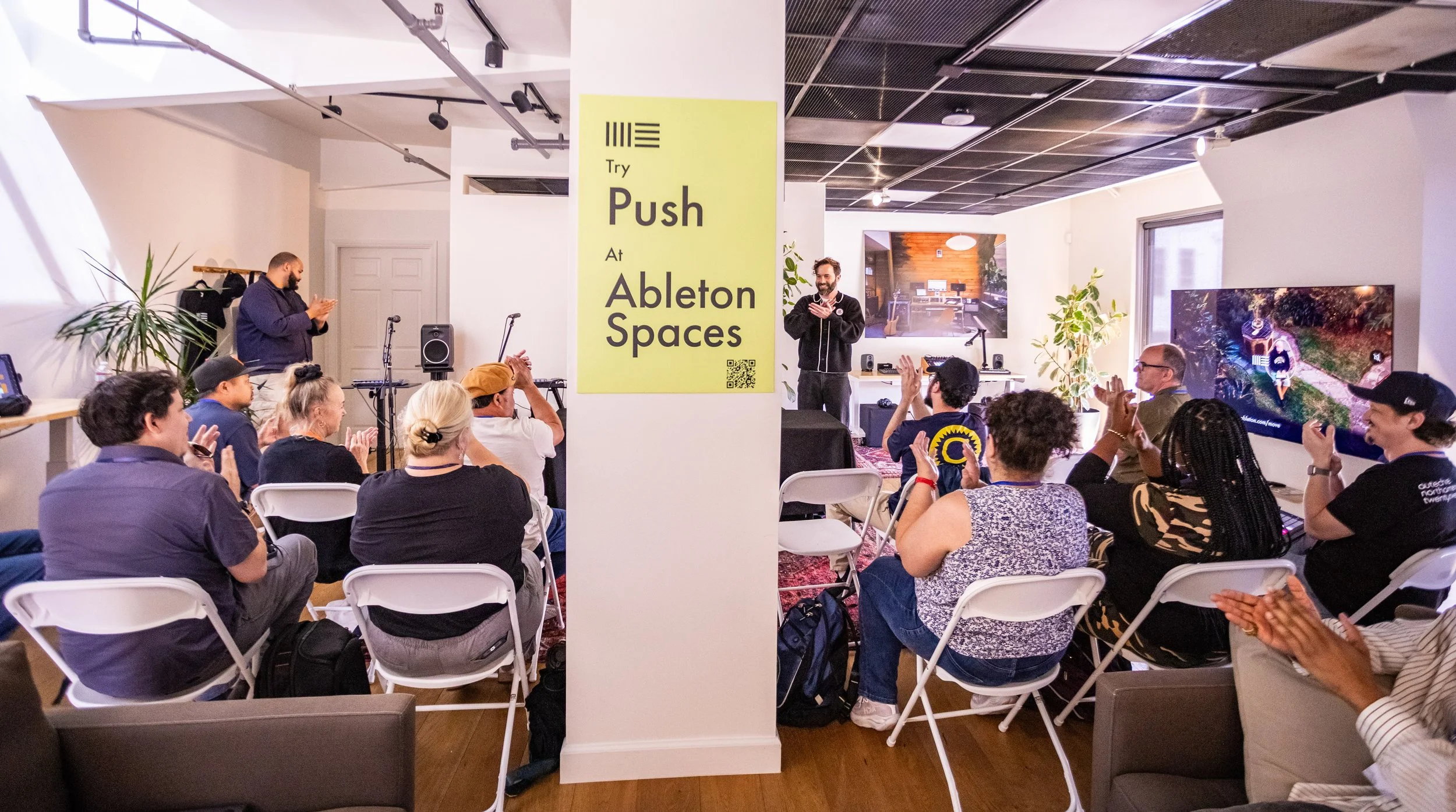
The listening party in full effect in the Ableton Studio.
Each group went up and played what they made. These serious, hardworking professionals were instantly turned into a joyful crew of creatives, reveling in each other’s work. They all came up with band names including gems like “Dr. Analog E and Ms. Pickles” and “Droopy Drops.”
The music was fun and unencumbered—and for real, their tracks sounded great! But again, who cares!? What mattered was the magic in the room. Each person was bearing witness to each other’s ability to create, collaborate, and participate in a creative community. Applause for one another was an implicit celebration of their own bravery, creativity, and boundless possibility.
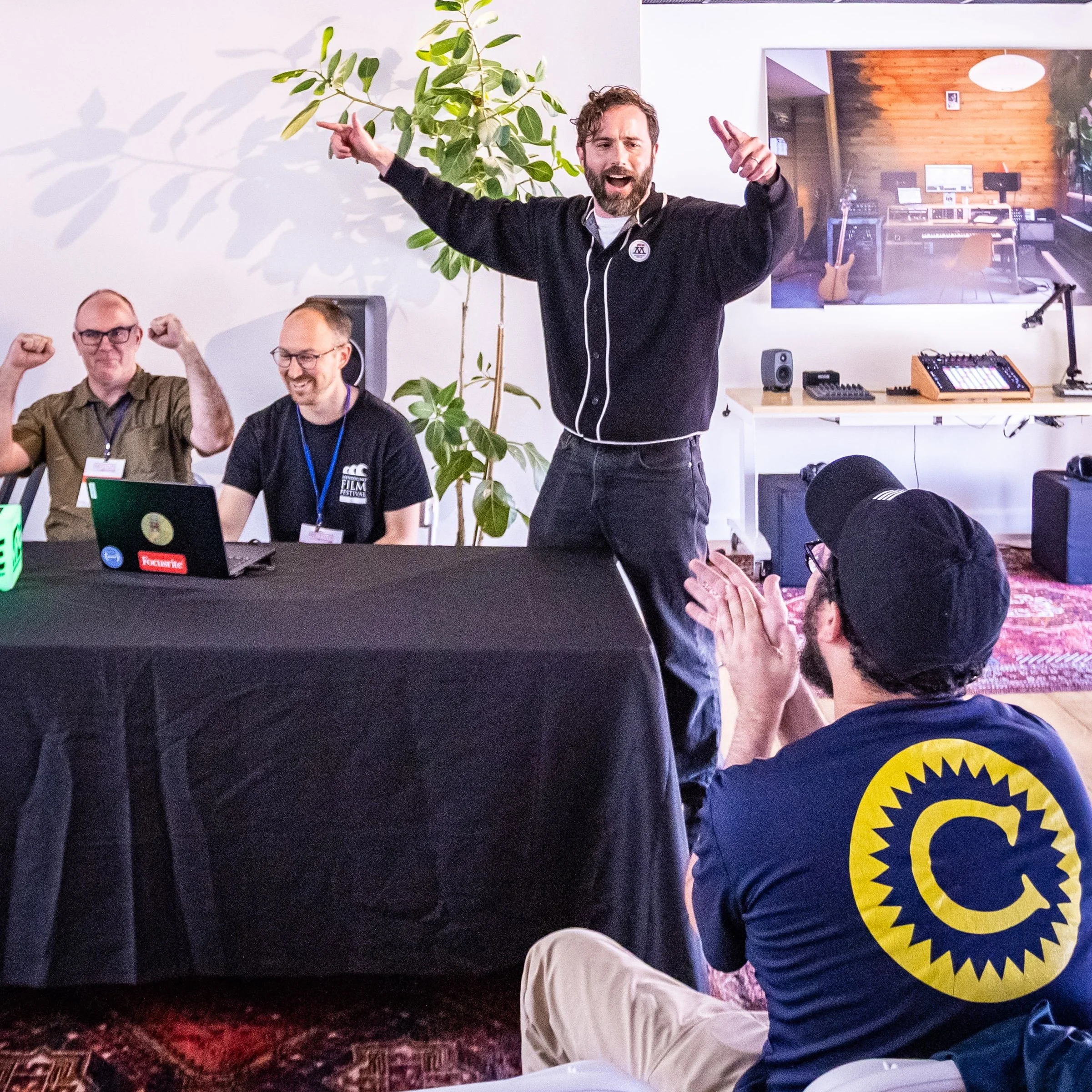
Lawrence playing hype man, modeling positivity and support during the listening party.
And that was all before noon! From there, we headed to Burbank for the podcasting field trip.
Workshop 2: 0 to 100 with Podcasting
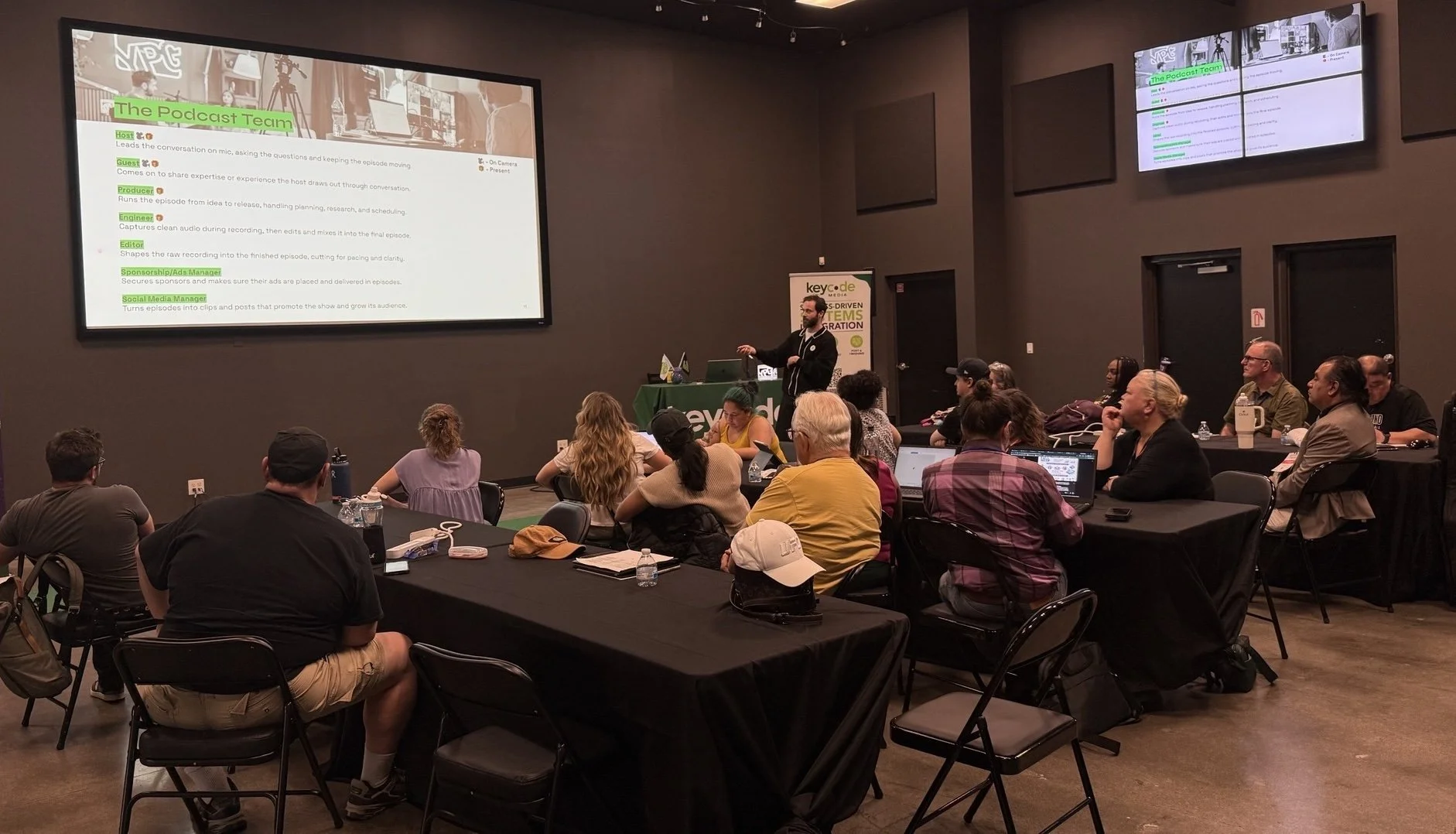
Lawrence leading the Podcasting 101 lecture at Key Code Media.
22 teachers signed up for the Podcasting 101: A Hands-On Workshop field trip to the beautiful facilities at Key Code Media in Burbank. We had teachers of music, broadcast, and film and TV, as well as administrators in the room—all folks with different backgrounds and visions for podcasting at their school. This is the beauty of podcasting: it is a low barrier-to-entry, inclusive way for any teacher to bring media into their classrooms. No matter what subject you’re teaching or what students are in your class, there is a place for podcasting.
We got right into a lecture on the size and scope of the podcasting industry (it’s big), how to podcast in the classroom, and how to think about capturing and editing media. Most folks in the room had tried podcasting in their classes, but struggled. As I delivered my lecture, I could almost hear things clicking in their minds.
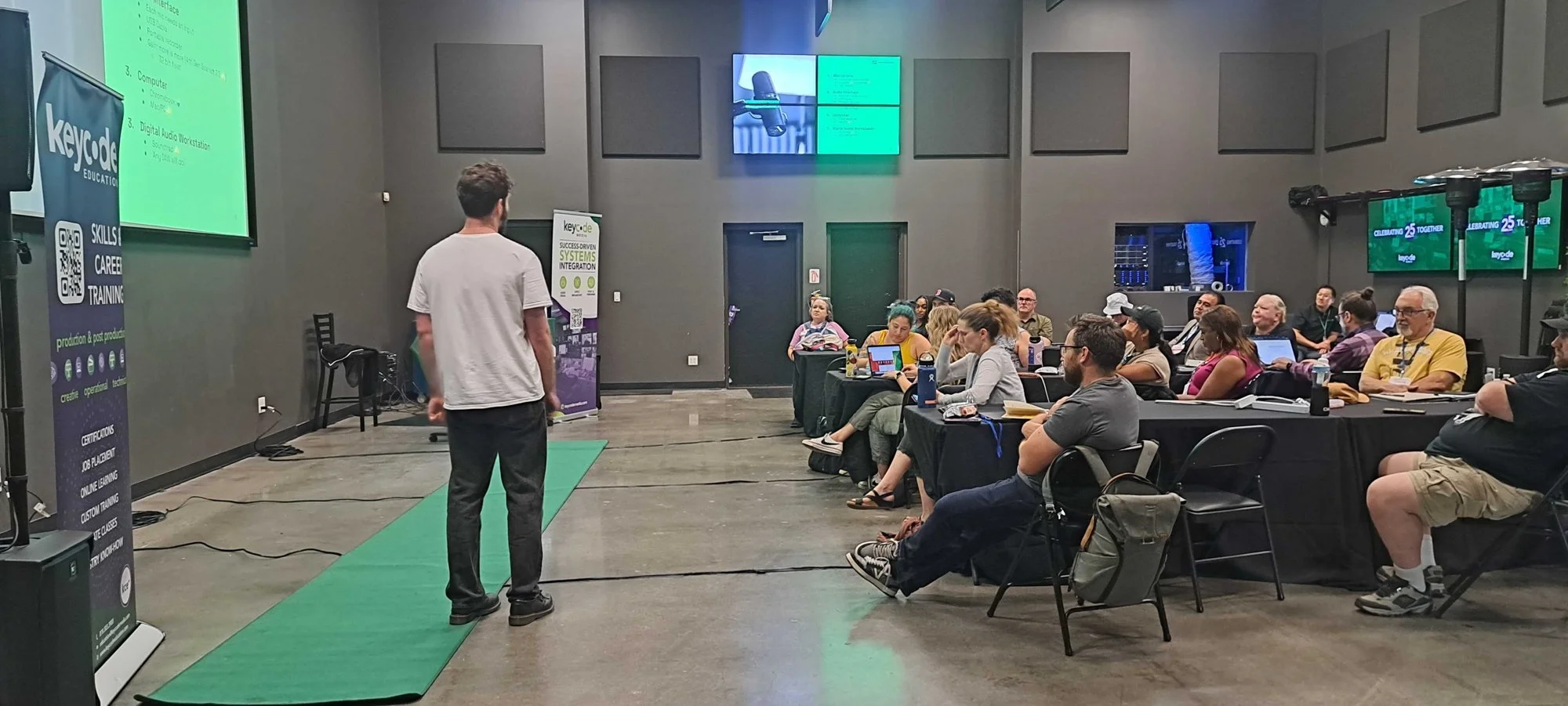
Lawrence breaking down the audio equipment essentials for podcasting.
We immediately put it all into practice by creating the CEN Institute Podcast. Here was the prompt:
What have you learned at the conference? What will you be taking back to your school?
I brought up the graphic organizer I prepared for the workshop and the teachers shared some of their learnings:
Collaboration is key
Between:
Community partners and schools
Teachers within the creative industry
Students
The state-mandated standards are a collaboration between teachers, industry, and state regulators
Industry is eager to support
Industry opening their doors, like Key Code Media
Teachers create bridges (critical!)
Elevating student voice and ushering in the next generation of talent are the goals
Diversity is key for sustainability and quality and building the world we want
We picked a host and two guests and assigned a few folks to help the Key Code Media team capture the episode. With the cast and crew set, we synthesized the learnings above into a script using the framework in the graphic organizer. I called up the on-camera team and we ran through the podcast while the rest of the teachers toured the facility and saw the podcasting studio where we were about to shoot.
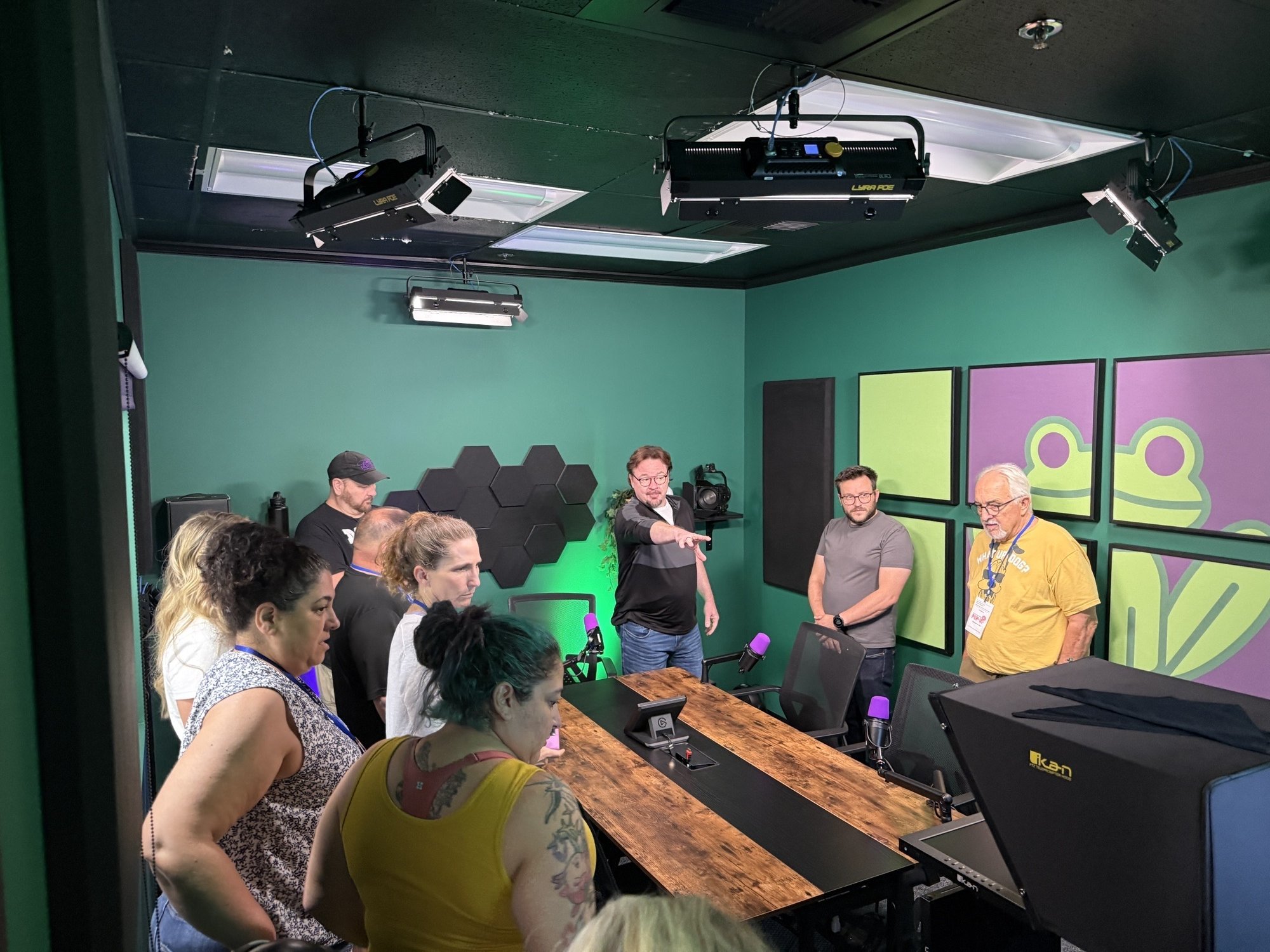
The Key Code Media team giving teachers a tour of the podcasting studio on site.
Once we were ready to go, I went up with the host and guests and got situated in the podcast studio. The team downstairs got in their places and we were ready to roll.
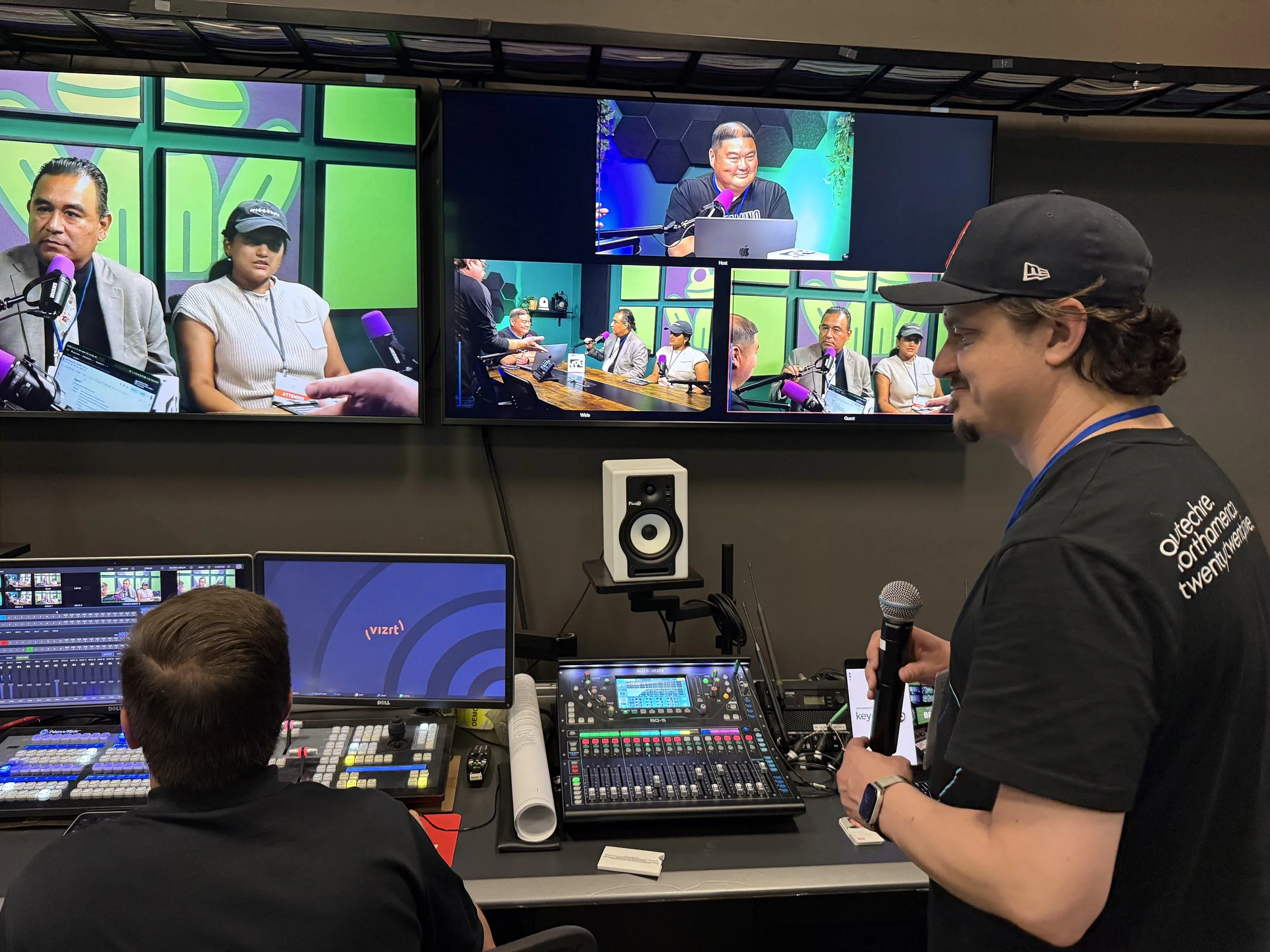
A teacher serving as the communicator between the studio and the control room.
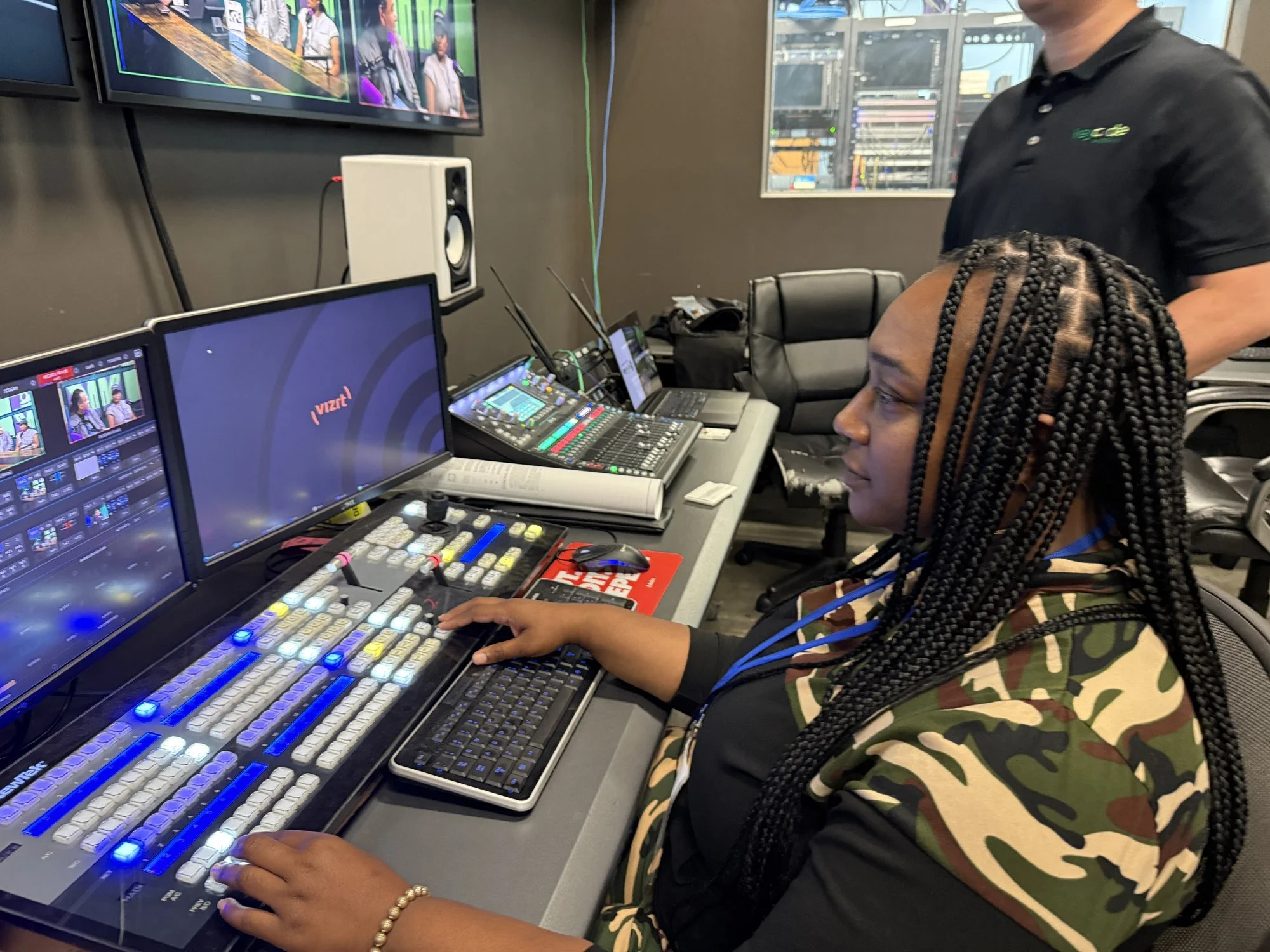
A teacher ready at the Vizrt TriCaster as the team prepares to record the podcast episode.
The red light hit and the host and guests ran through the script. Were there a few flubs? Sure. Did it sound like a podcast we created in 20 minutes? Maybe. But again, WHO CARES!? It’s about the journey! Every single person in the room learned a ton about how to put together a podcast—not just those on camera. The episode was an exercise, a study, not a product. Teachers who do this over the course of weeks or semesters should push to reach the level of an industry-ready product. But not when we’re going 0 to 100 in two hours. That freedom to be imperfect and embrace the role of the learner is liberating and fruitful.
Check out the podcast below:
Closing Thoughts
Putting on a music tech performance or making a video podcast in two hours with folks who have never done it before might sound crazy. Maybe it is a little bit. But when you focus on the human element, let go of all pretense, and provide expert support, the deep end of the pool becomes much less scary. You realize that there’s more fun to be had and lessons to be learned when you leave the shallow end. But it has to be done with care, an open mind, and a great deal of trust all around for it to be safe and successful.
Thank you so much to all of the people that came together to make these workshops possible:
Ableton EDU and Spaces Teams
Simon Rios for the photos
All of the amazing teachers that put their trust in the YPG team and jumped in
I can’t wait to do another 0 to 100 with Ableton Workshop next week at Eastman School of Music. If you’re interested in hosting YPG for a workshop or professional development, reach out to contact@youngproducersgroup.com.
Sign up here for a trial of the YPG Podcasting Resources and our Ableton Live Music Production 2 Curriculum.